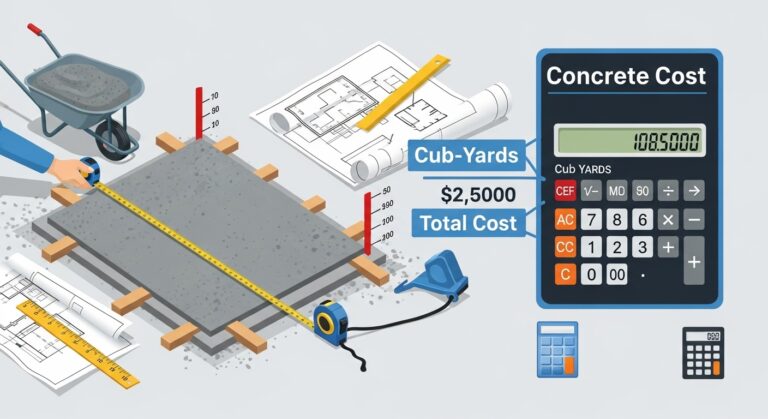
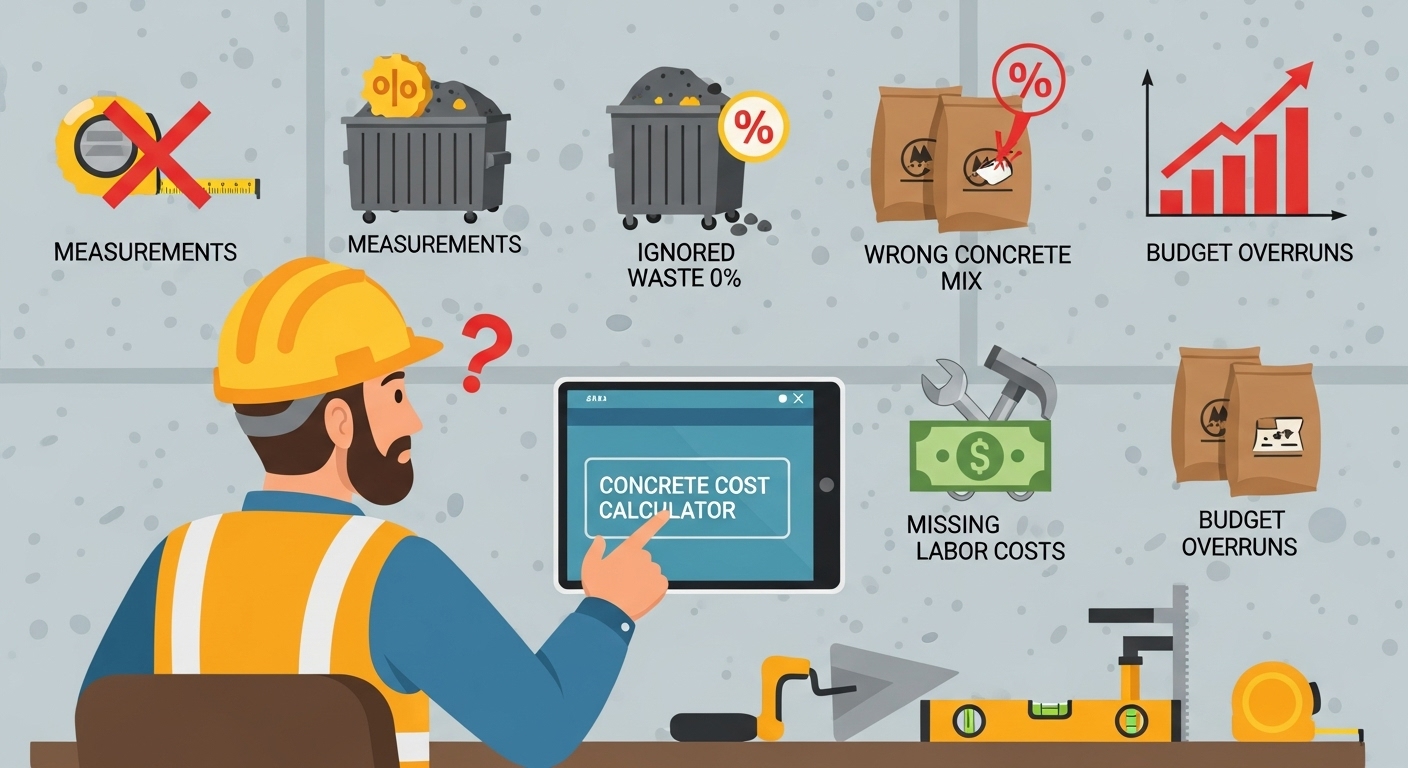
Concrete cost calculators have become a go to tool for homeowners, contractors, and DIYers planning construction projects. They are fast, convenient, and give a rough idea of how much concrete you’ll need and what it might cost.
But here is the catch a calculator is only as accurate as the information you put into it. Small mistakes can lead to under ordering, wasted materials, unexpected expenses, and project delays.
In this guide, we will break down the top 5 mistakes to avoid when using a concrete cost calculator, along with practical tips to get the most accurate estimate possible.
Incorrect Measurements
This is the most common and most costlymistake.
Concrete calculators rely entirely on dimensions like length, width, and depth. If any of these numbers are off, your final estimate will be wrong.
Common measurement errors include:
- Guessing instead of measuring
- Mixing units (feet vs meters, inches vs centimeters)
- Forgetting to account for slopes or uneven ground
- Using the planned depth instead of the actual excavation depth
How to avoid it:
- Measure every section carefully with a tape or laser measure
- Stick to one unit system throughout
- Measure depth at multiple points if the ground isn’t level
- Round up slightly rather than down
Remember: Even a half-inch depth error over a large slab can mean several extra bags or an entire truck of concrete.
Ignoring Waste and Overpour
Most concrete cost calculators give you the exact volume required. Real-world concrete work, however, is rarely exact.
Why waste happens:
- Spillage during transport
- Uneven or shifting forms
- Overfilling low spots
- Surface finishing adjustments
- If you order exactly what the calculator suggests, you risk running out before the job is done, which can weaken the slab if you are forced to pour in stages.
How to avoid it:
- Add 5–10% extra concrete to the calculated total
- For complex or uneven pours, consider adding closer to 10%
- That small buffer can save you time, money, and structural issues later.
Forgetting Labor and Additional Costs
Costs often excluded:
- Labor charges
- Concrete delivery fees
- Pump truck rental
- Reinforcement materials (rebar, wire mesh)
- Formwork materials
- Site preparation and cleanup
How to avoid it:
- Treat the calculator result as a base estimate, not the final cost
- Create a checklist of all project-related expenses
- Ask local suppliers about delivery minimums and extra fees
Failing to factor in these costs can make a project seem affordable until the invoices arrive.
Using the Wrong Concrete Type or Strength
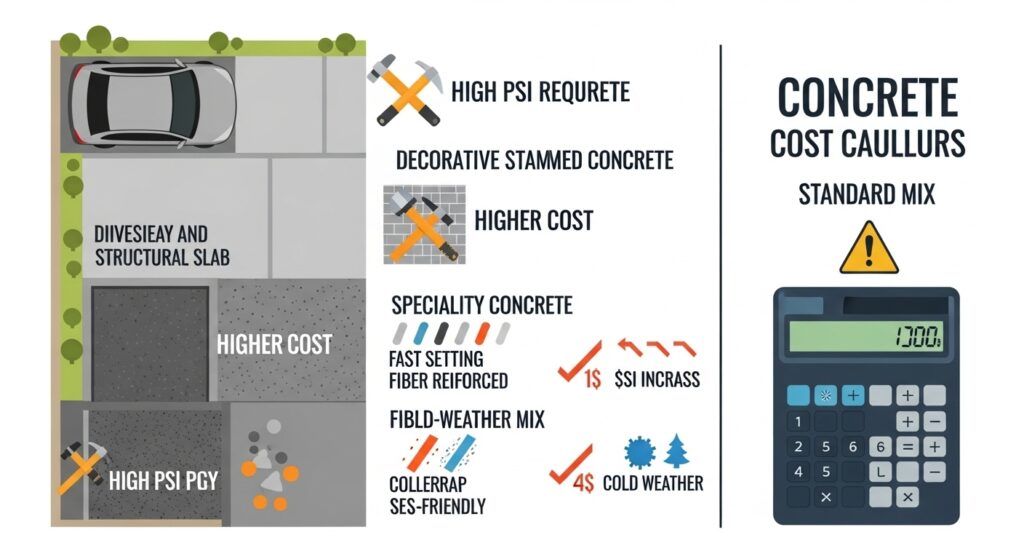
Not all concrete is the same, and many calculators assume a standard mix unless told otherwise.
Examples:
- Driveways and structural slabs need higher PSI ratings
- Decorative or stamped concrete costs more
- Fast-setting, fiber-reinforced, or cold-weather mixes increase price
- Specialty additives aren’t always included in estimates
How to avoid it:
- Confirm the required concrete strength (PSI) for your project
- Select the correct mix type in the calculator (if available)
- Consult local building codes or a supplier if unsure
Relying on a Single Calculator
Concrete cost calculators can vary widely based on:
- Regional pricing assumptions
- Material cost updates
- Included vs excluded variables
Using just one calculator can give a misleading sense of accuracy.
How to avoid it:
- Compare results from two or three calculators
- Cross-check with quotes from local concrete suppliers
- Adjust estimates based on your location and project complexity
A few extra minutes of comparison can prevent costly surprises.
FAQ About Concrete Cost Calculator
Q1) How accurate are concrete cost calculators?
Ans:- Concrete cost calculators are generally accurate for material volume estimates, but they are less reliable for total project cost unless you manually include labor, delivery, and additional expenses.
Q2) Should I always add extra concrete to my calculation?
Ans:- Yes. Adding 5–10% extra is standard practice to account for waste, uneven ground, and overpour.
Q3) Do concrete calculators include delivery costs?
Ans:- Most do not. Delivery fees, fuel surcharges, and minimum load charges are usually separate and vary by supplier.