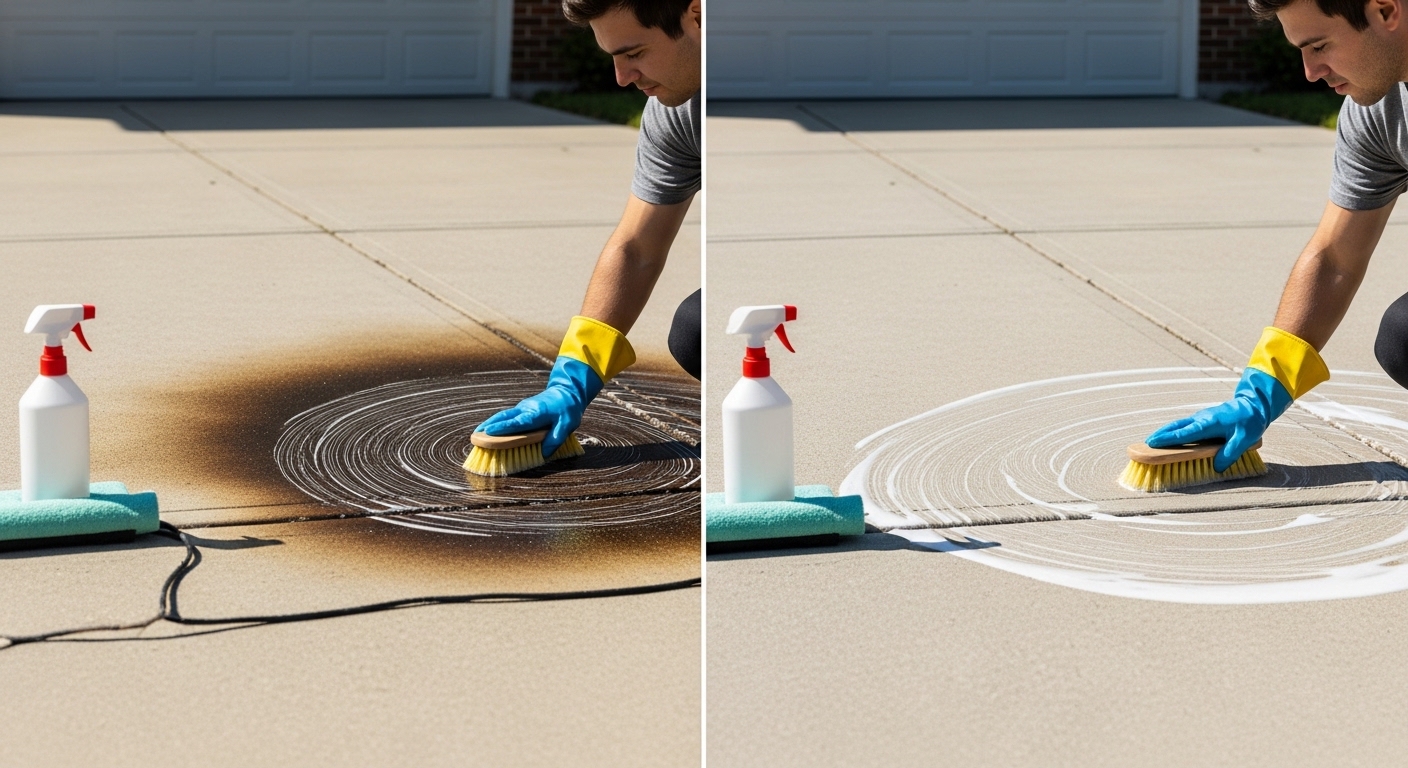
Oil stains on concrete are one of the most frustrating problems homeowners, garage owners, and construction professionals face. Whether it’s a leaking car, lawn mower, motorcycle, or heavy equipment, oil can quickly soak into porous concrete and leave dark, ugly stains that ruin the look of your driveway, garage floor, patio, or parking area.
The good news?
With the right cleaning methods and tools, you can completely remove or significantly lighten even old oil stains. In this complete guide, you’ll learn step-by-step techniques, DIY solutions, professional methods, and prevention tips to restore your concrete surface to a clean, fresh look.
This guide is perfect for:
- Homeowners
- DIYers
- Garage owners
- Contractors
- Property managers
- Anyone maintaining concrete surfaces
Let’s get started.
Why Oil Stains Are Hard to Remove from Concrete
Before cleaning, it helps to understand the problem.
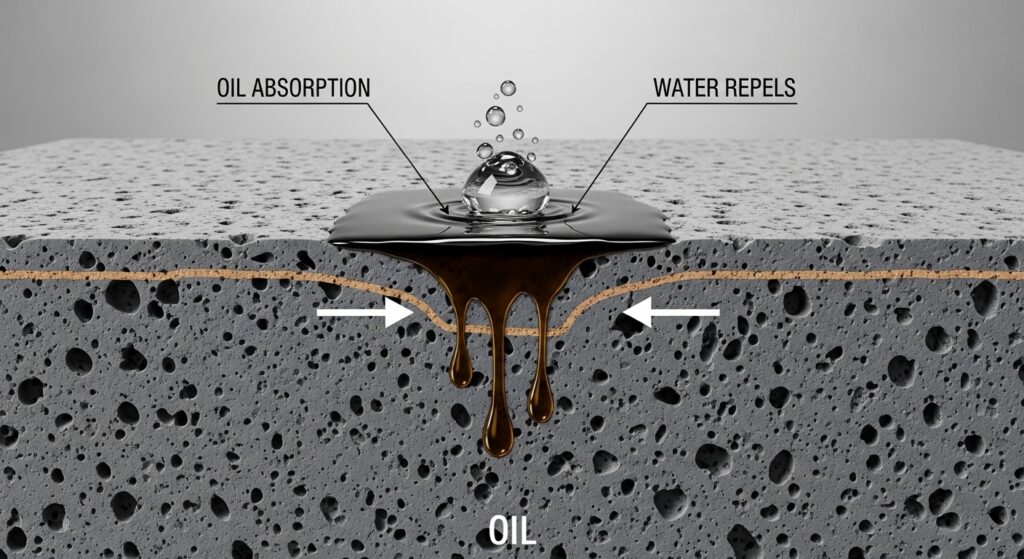
Concrete is porous, meaning it has tiny holes and air pockets. When oil spills:
- Oil penetrates deep inside the pores
- It bonds with the surface
- Water alone cannot dissolve it
Unlike dirt or mud, oil is hydrophobic (repels water), which makes simple washing ineffective.
That’s why you need absorbing agents, degreasers, or chemical cleaners to break down and lift the oil.
Common Places Where Oil Stains Occur
Oil stains commonly appear on:
- Driveways
- Garage floors
- Parking lots
- Sidewalks
- Workshops
- Construction sites
- Basements
- Concrete patios
These stains not only look bad but can also:
- Make surfaces slippery
- Reduce property value
- Cause safety hazards
- Damage long-term concrete quality
Regular cleaning protects both appearance and durability.
Tools and Supplies You May Need
Before starting, gather these basic materials:
- Baking soda or cat litter
- Dish soap or degreaser
- Scrub brush (stiff bristles)
- Hot water
- Pressure washer
- Commercial concrete cleaner
- Protective gloves
- Mop or sponge
Having everything ready saves time and improves results.
Step-by-Step Methods to Remove Oil Stains from Concrete
Below are the most effective cleaning methods, from simple home remedies to professional solutions.
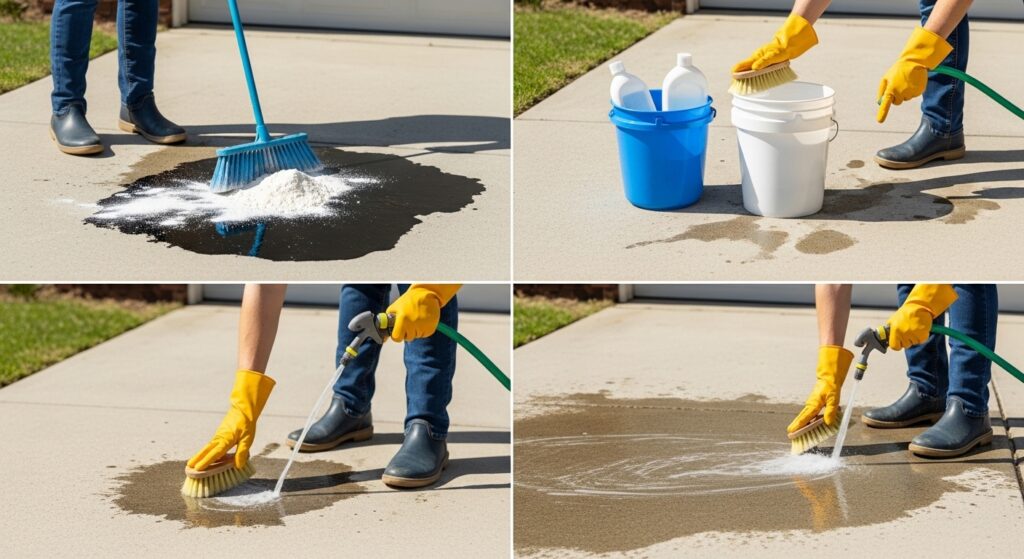
Method 1: Fresh Oil Spill (Act Immediately)
If the oil spill just happened, this is your best chance to remove it completely.
Steps:
1. Absorb the Oil
Sprinkle:
- Cat litter
- Baking soda
- Sawdust
- Cornstarch
Let it sit for 2 to 4 hours.
These materials soak up oil before it penetrates deeper.
2. Sweep It Away
Use a broom to remove the absorbed material.
3. Wash the Area
Mix:
- Hot water
- Dish soap or degreaser
Scrub thoroughly.
4. Rinse
Use clean water or a hose.
Fresh stains often disappear completely with this method.
Method 2: Dish Soap and Hot Water (Best DIY Solution)
This is the easiest and cheapest solution for light to medium stains.
Steps:
- Pour dish soap directly onto the stain
- Let sit for 20–30 minutes
- Scrub with stiff brush
- Rinse with hot water
Dish soap breaks down grease effectively.
Repeat if necessary.
Method 3: Baking Soda or Powdered Detergent
Baking soda is excellent for absorbing deep oil.
Steps:
- Cover stain with baking soda
- Add small amount of water to form paste
- Scrub aggressively
- Leave overnight
- Rinse next day
This method works great for older stains.
Method 4: Commercial Degreaser or Concrete Cleaner
For tough stains, professional products work best.
Look for:
- Concrete degreasers
- Oil stain removers
- Garage floor cleaners
- Heavy-duty alkaline cleaners
Steps:
- Apply cleaner directly
- Let sit 15–30 minutes
- Scrub thoroughly
- Rinse or pressure wash
These products break oil bonds chemically.
Method 5: Pressure Washing
Pressure washers are powerful for large areas like:
- Driveways
- Parking spaces
- Patios
Steps:
- Apply degreaser
- Wait 15 minutes
- Pressure wash at high PSI
- Move slowly for best results
Hot water pressure washers are even more effective.
Method 6: Poultice Method (Deep Stains)
For very old or deep stains, try this professional technique.
Steps:
- Mix absorbent material + solvent (acetone/mineral spirits)
- Make thick paste
- Spread over stain
- Cover with plastic
- Leave 24 hours
- Remove and rinse
The paste pulls oil out of pores.
This is highly effective for stubborn spots.
Natural and Eco-Friendly Cleaning Options
If you prefer green cleaning:
Try:
- Vinegar + baking soda
- Lemon juice
- Biodegradable degreasers
These are safer for the environment and pets.
However, they may take multiple applications.
What NOT to Do
Avoid these mistakes:
Don’t use only water
Don’t scrub with wire brush (damages concrete)
Don’t ignore fresh spills
Don’t use harsh acids without knowledge
Don’t mix chemicals randomly
Improper cleaning can worsen stains.
Preventing Future Oil Stains
Prevention is easier than cleaning.
Smart Tips:
Seal Your Concrete
Concrete sealers create protective layer preventing oil absorption.
Use Drip Pans
Place under vehicles or machines.
Clean Spills Immediately
Act fast to avoid deep penetration.
Regular Maintenance
Wash driveway monthly.
Install Mats
Garage mats protect floors from leaks.
Sealed concrete is much easier to maintain.
How Oil Stains Affect Concrete Cost and Maintenance
Oil damage doesn’t only affect looks it impacts your budget too.
If stains are ignored:
- Concrete may weaken
- Repairs become expensive
- Replacement costs increase
- Property value drops
For larger projects like driveways or slabs, cleaning and maintenance costs matter.
If you’re planning repairs or new concrete installation, you can estimate expenses using tools like a Concrete Cost Calculator to calculate materials, labor, and project budgets accurately.
This helps you plan smarter and avoid overspending.
Professional Cleaning vs DIY: Which is Better?
| Situation | Best Option |
|---|---|
| Small fresh stains | DIY cleaning |
| Medium stains | Degreaser + scrub |
| Large areas | Pressure washer |
| Old deep stains | Professional service |
| Commercial spaces | Professional cleaning |
DIY saves money, but professionals save time and deliver guaranteed results.
FAQs
Q1: How long do oil stains last on concrete?
Ans: If untreated, they can last for years. Proper cleaning removes or lightens them significantly.
Q2: Does vinegar remove oil stains?
Ans: It helps with light stains but isn’t strong enough for deep oil.
Q3: Can baking soda remove old oil stains?
Ans: Yes, especially when used repeatedly or combined with scrubbing.
Q4: Is pressure washing enough?
Pressure washing works best with degreaser, not alone.
Q5: Should I seal concrete after cleaning?
Ans: Yes. Sealing prevents future stains and extends surface life.
Q6: What is the fastest way to clean driveway oil stains?
Ans: Use degreaser + scrub + pressure wash for quickest results.
Pro Tips for Best Results
- Always test cleaners on small area first
- Use hot water whenever possible
- Repeat treatments for stubborn stains
- Clean on sunny days for faster drying
- Seal concrete after deep cleaning
Consistency gives better results than one-time cleaning.
Conclusion:
Oil stains on concrete may look permanent, but they’re not impossible to remove.
With the right tools and methods, you can restore your:
- Driveway
- Garage floor
- Patio
- Parking space
From simple baking soda solutions to commercial degreasers and pressure washing, there’s a solution for every type of stain.
Regular maintenance, quick action, and proper sealing will keep your concrete clean and long-lasting.
If you’re planning new concrete work or repairs, don’t forget to estimate your project costs accurately using a Concrete Cost Calculator so you can budget effectively and avoid surprises.
Clean concrete not only looks better it lasts longer and saves money.