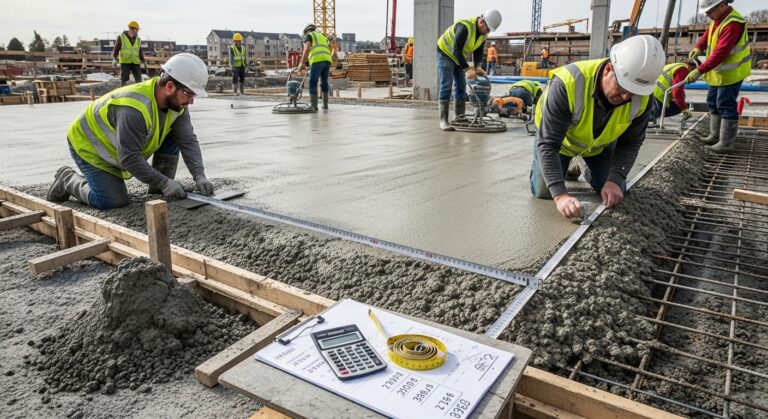
Estimating the cost of concrete is one of the most important steps in any construction project. Whether you are pouring a driveway, building a slab foundation, installing footings, or working on a DIY home improvement project, knowing how much concrete you need and how much it will cost can save you time, money, and stress.
This is where a Concrete Cost Calculator becomes extremely useful.
In this detailed guide, we will explain what a concrete cost calculator is, how it works, and how to use it step by step to estimate your project accurately. We will also cover common mistakes, cost factors, real-world examples, and frequently asked questions so you can plan your project with confidence.
1. What Is a Concrete Cost Calculator?
A Concrete Cost Calculator is an online tool that helps you estimate:
- The volume of concrete required for your project
- The number of concrete bags needed (if using bagged concrete)
- The total cost of concrete, including material price and waste
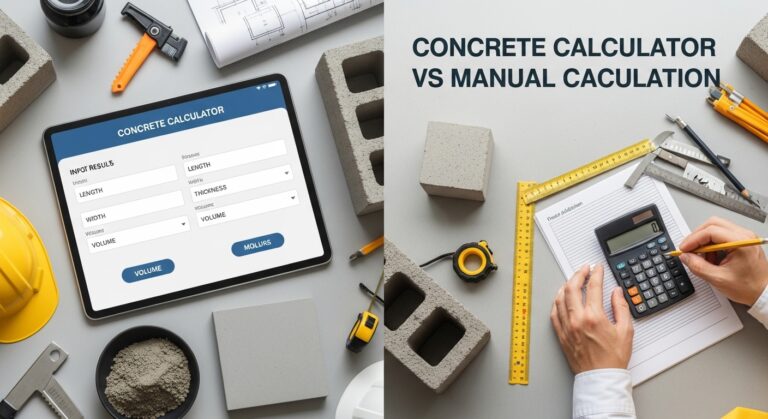
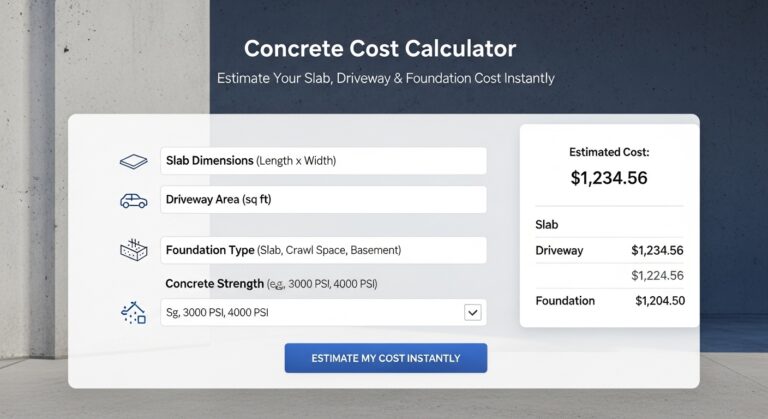
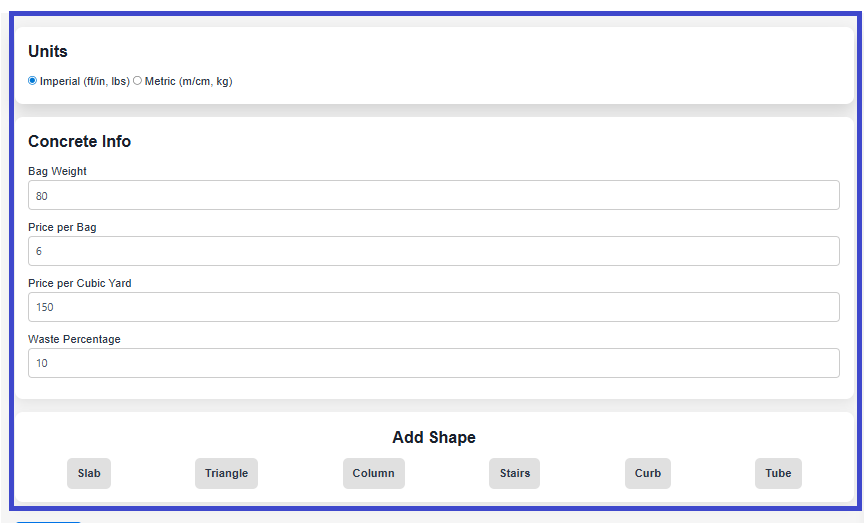
Instead of doing complex math manually, the calculator allows you to enter basic measurements such as length, width, depth, and price, and it instantly provides accurate results.
These calculators support multiple shapes such as slabs, footings, columns, walls, stairs, curbs, and post holes, making them suitable for almost any construction project.
2. Why Accurate Concrete Cost Estimation Matters
Concrete estimation errors can be expensive. Ordering too little concrete can delay your project, while ordering too much wastes money.
Accurate estimation helps you:
- Avoid material shortages
- Control construction costs
- Plan your budget efficiently
- Reduce concrete waste
- Save time during ordering
A reliable concrete cost calculator ensures your project stays on schedule and within budget.
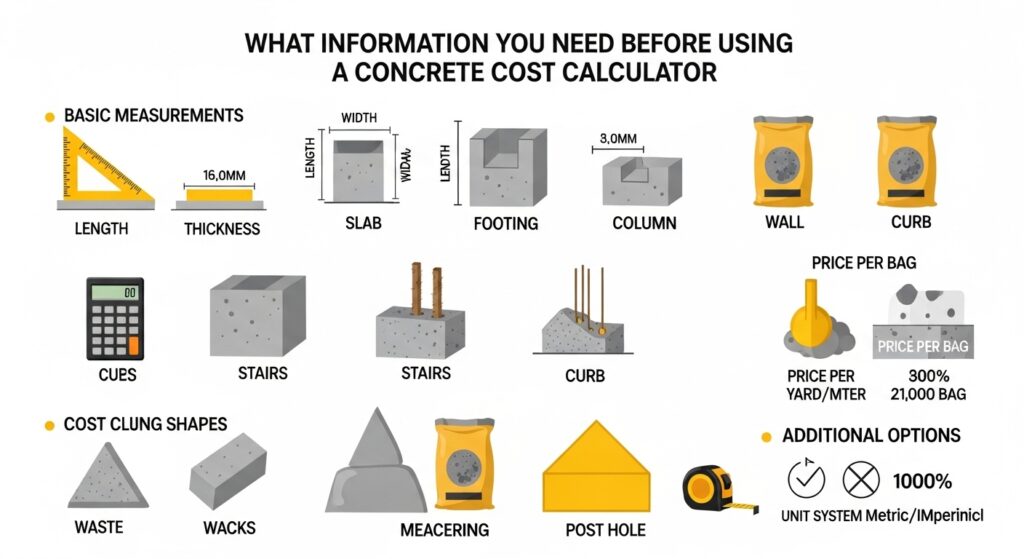
3. What Information You Need Before Using a Concrete Cost Calculator
Before using a calculator, gather the following details:
Basic Measurements
- Length
- Width
- Thickness or depth
Concrete Shape
- Slab
- Footing
- Column
- Wall
- Stairs
- Curb
- Post hole
Cost Details
- Price per cubic yard or cubic meter
- Or price per bag (for bagged concrete)
Additional Options
- Waste percentage (usually 5%–10%)
- Unit system (Metric or Imperial)
Having this information ready ensures accurate results.
4. Step-by-Step: How to Use a Concrete Cost Calculator
Using a concrete cost calculator is simple. Follow these steps:
Step 1: Select the Shape
Choose the shape that matches your project, such as slab, footing, or column.
Step 2: Enter Dimensions
Input the required measurements:
- Length
- Width
- Height or depth
You can usually enter values in feet/inches or meters/centimeters.
Step 3: Choose Units
Select either:
- Imperial units (feet, inches, cubic yards)
- Metric units (meters, centimeters, cubic meters)
Step 4: Enter Concrete Cost
Add:
- Price per cubic yard or cubic meter
- Or bag price and bag weight
Step 5: Add Waste Percentage
Include extra concrete (5%–10%) to cover spillage and uneven surfaces.
Step 6: Calculate
Click the Calculate button to instantly get:
- Concrete volume
- Number of bags (if applicable)
- Total estimated cost
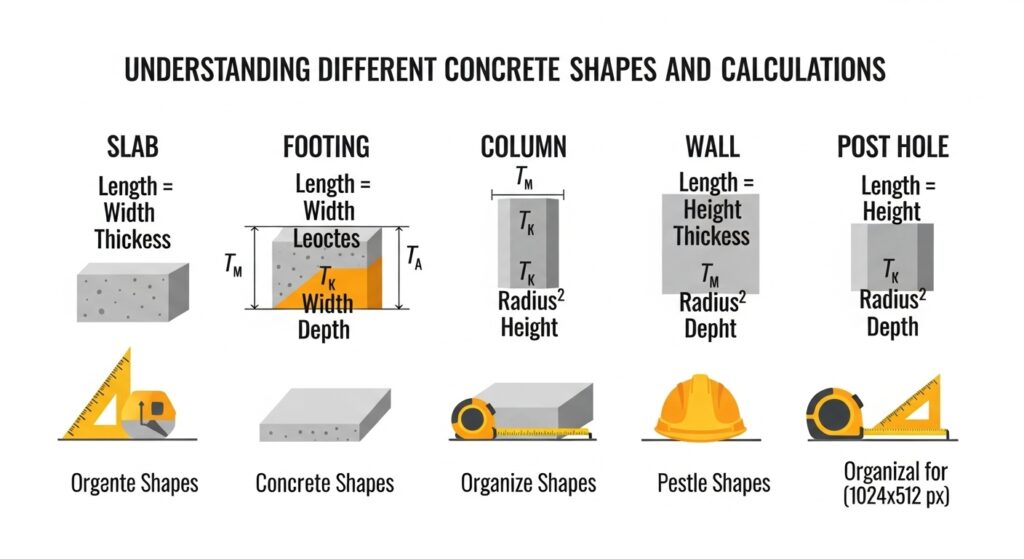
5. Understanding Different Concrete Shapes and Calculations
Different projects require different calculations.
Concrete Slab
Used for patios, driveways, floors, and foundations.
Formula:
Length × Width × Thickness
Footings
Used to support structures and foundations.
Formula:
Length × Width × Depth
Columns
Used for pillars and structural supports.
Formula:
π × Radius² × Height
Walls
Used for retaining walls and boundary walls.
Formula:
Length × Height × Thickness
Post Holes
Used for fencing and poles.
Formula:
π × Radius² × Depth
A good calculator automatically applies these formulas.
6. How Concrete Cost Is Calculated
Concrete cost depends on several factors:
Material Cost
- Ready-mix concrete price
- Bagged concrete price
Volume Required
More volume = higher cost.
Waste Allowance
Extra concrete increases total cost slightly but prevents shortages.
Delivery Charges
Ready-mix concrete may include delivery fees.
Labor (Optional)
Some calculators include labor cost estimation.
7. Ready-Mix Concrete vs Bagged Concrete Cost
Ready-Mix Concrete
Best for large projects like driveways and slabs.
Pros
- Faster
- Consistent quality
Cons
- Delivery fees
- Minimum order requirements
Bagged Concrete
Best for small DIY projects.
Pros
- Easy to transport
- No delivery fee
Cons
- More labor
- Higher cost per cubic unit
A concrete cost calculator helps you compare both options.
8. Metric vs Imperial Units Explained
Concrete calculators support both unit systems.
Imperial Units
- Feet
- Inches
- Cubic yards
Used mostly in the USA.
Metric Units
- Meters
- Centimeters
- Cubic meters
Used internationally.
Always double-check your unit selection to avoid incorrect results.
9. Common Mistakes to Avoid When Estimating Concrete Cost
Avoid these common errors:
- Forgetting to include waste percentage
- Mixing metric and imperial units
- Measuring uneven surfaces incorrectly
- Ignoring delivery fees
- Choosing the wrong shape
Using a trusted calculator minimizes these mistakes.
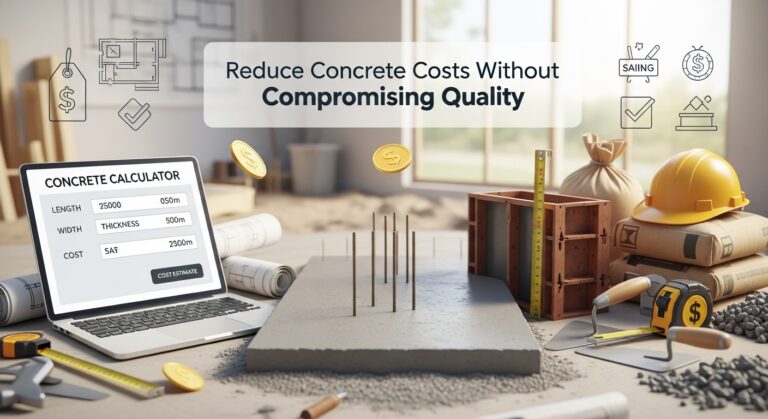
10. Tips to Reduce Concrete Costs
Here are some cost-saving tips:
- Measure carefully before ordering
- Order slightly extra, not excessive
- Compare ready-mix and bagged options
- Schedule delivery efficiently
- Avoid rework due to poor planning
Small planning improvements can lead to big savings.
11. Who Should Use a Concrete Cost Calculator?
Concrete cost calculators are useful for:
- Homeowners
- DIY enthusiasts
- Contractors
- Builders
- Civil engineers
- Construction students
Anyone working with concrete can benefit.
12. Benefits of Using an Online Concrete Cost Calculator
Using an online calculator offers:
- Fast and accurate results
- Easy-to-use interface
- Multiple shape options
- Support for metric and imperial units
- Free and accessible anytime
It eliminates guesswork and manual calculations.
13. FAQs about Concrete Cost Calculator
Q.No:1 How accurate is a concrete cost calculator?
Ans: Most calculators are highly accurate when correct measurements and prices are entered.
Q.No:2 How much extra concrete should I order?
Ans: A waste margin of 5% to 10% is recommended.
Q.No:3 Can I calculate concrete cost for stairs or columns?
Yes, advanced calculators support multiple shapes.
Q.No:4 Is ready-mix concrete cheaper than bagged concrete?
Ans: For large projects, ready-mix is usually more cost-effective.
Q.No:5 Can I use a concrete cost calculator for DIY projects?
Ans: Absolutely. It is perfect for DIY users.
14. Conclusion
A Concrete Cost Calculator is an essential tool for anyone planning a concrete project. It helps you estimate material requirements, control costs, reduce waste, and plan efficiently whether you are working on a small DIY task or a large construction job.
By understanding how to use the calculator correctly, selecting the right shape, entering accurate measurements, and including waste allowance, you can avoid costly mistakes and ensure your project runs smoothly.
If you want a stress-free way to plan your next concrete project, using a reliable concrete cost calculator is the smartest place to start.