Concrete is one of the most widely used construction materials in the world. Whether you are building a driveway, patio, foundation, slab, or sidewalk, calculating the correct amount of concrete and estimating the cost accurately is essential. A Concrete Cost Calculator helps contractors, homeowners, and builders determine the quantity of concrete required and the total cost of the project.
In this comprehensive guide, you will learn how a concrete cost calculator works, how to estimate concrete costs, factors that influence pricing, and how to calculate concrete for different types of projects.
What Is a Concrete Cost Calculator?
Concrete Cost Calculator is an online or manual tool used to estimate the total cost of concrete required for a construction project. It calculates:
- The volume of concrete needed
- The number of concrete bags or cubic yards required
- The estimated project cost
These calculators simplify planning and help avoid ordering too much or too little concrete.
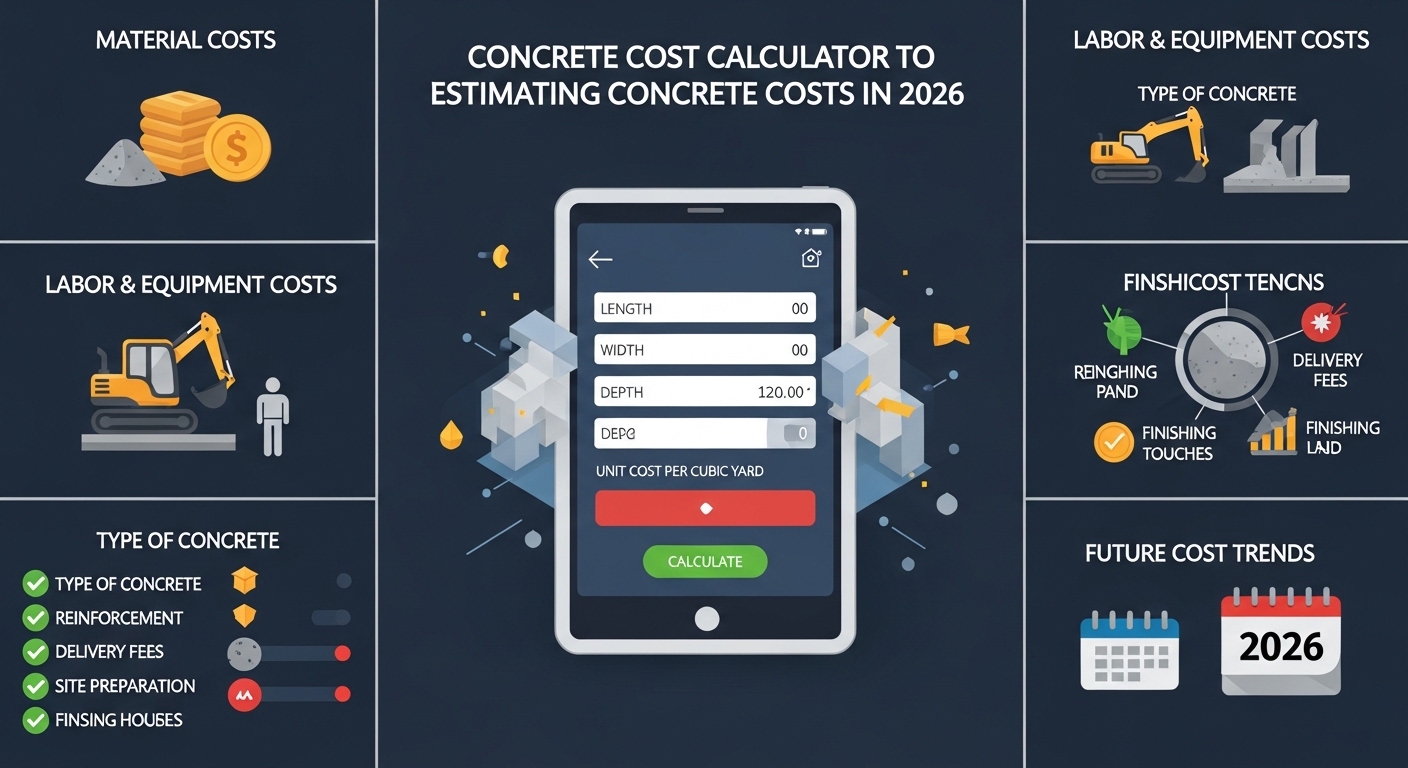
Most calculators require three basic inputs:
- Length
- Width
- Depth (Thickness)
Using these values, the calculator determines the total volume of concrete needed.
Why Use a Concrete Cost Calculator?
Using a concrete calculator provides several advantages for both professionals and homeowners.
Accurate Material Estimation
One of the biggest benefits is accurate material estimation. Ordering too little concrete can delay construction, while ordering too much can waste money.
Saves Time
Manual calculations can be time-consuming and prone to error. A calculator produces instant results.
Budget Planning
Concrete projects can be expensive. A cost calculator helps estimate the total budget before starting the project.
Reduces Material Waste
Proper calculations prevent over-ordering materials, which helps reduce construction waste.
Basic Formula for Calculating Concrete Volume
Concrete is typically measured in cubic yards or cubic meters.
Volume Formula
The basic formula used for concrete calculation is:
Volume = Length × Width × Depth
Where:
- Length = project length
- Width = project width
- Depth = slab thickness
For example:
- Length = 10 feet
- Width = 10 feet
- Depth = 4 inches (0.333 feet)
Volume calculation:
10 × 10 × 0.333 = 33.3 cubic feet
Since 1 cubic yard = 27 cubic feet
33.3 ÷ 27 = 1.23 cubic yards
Average Concrete Cost in 2026
The cost of concrete varies depending on location, material quality, and labor.
Average Price Per Cubic Yard
Typical concrete costs range between:
- $120 – $180 per cubic yard
In some regions the price may reach:
- $200 per cubic yard with delivery
Cost Per Square Foot
For residential projects:
- $4 – $8 per square foot
For reinforced or decorative concrete:
- $8 – $18 per square foot
Concrete Cost Calculator Example
Let’s calculate the cost for a 12 × 12 patio with 4-inch thickness.
Step 1: Convert Thickness to Feet
4 inches ÷ 12 = 0.333 feet
Step 2: Calculate Volume
12 × 12 × 0.333 = 47.95 cubic feet
Step 3: Convert to Cubic Yards
47.95 ÷ 27 = 1.78 cubic yards
Step 4: Calculate Cost
If concrete costs $150 per cubic yard
1.78 × 150 = $267
Estimated concrete cost: $267
Concrete Bag Calculator
If you are using pre-mixed concrete bags, you must calculate how many bags are required.
Common bag sizes:
- 40 lb bag
- 60 lb bag
- 80 lb bag
Coverage Per Bag
| Bag Size | Coverage |
|---|---|
| 40 lb | 0.011 cubic yards |
| 60 lb | 0.017 cubic yards |
| 80 lb | 0.022 cubic yards |
Example
If your project requires 1 cubic yard of concrete:
80 lb bags needed:
1 ÷ 0.022 = 45 bags
Concrete Cost for Different Projects
Concrete costs vary depending on the type of project.
Concrete Driveway
Average cost:
- $6 – $12 per square foot
Typical driveway cost:
- $3,000 – $7,000
Concrete Patio
Average cost:
- $5 – $10 per square foot
Total cost:
- $1,500 – $4,000
Concrete Slab
Concrete slabs are commonly used for garages and sheds.
Average cost:
- $6 – $14 per square foot
Concrete Foundation
Foundations require reinforced concrete and labor.
Typical cost:
- $8,000 – $25,000
Factors That Affect Concrete Cost
Many factors influence the total cost of concrete.
1. Project Size
Larger projects usually reduce cost per square foot due to bulk materials.
2. Concrete Thickness
Thicker slabs require more concrete and increase cost.
Typical thickness:
- Sidewalk: 4 inches
- Driveway: 5–6 inches
- Foundation: 8–12 inches
3. Reinforcement Materials
Rebar or wire mesh increases durability but adds cost.
Additional cost:
- $1 – $3 per square foot
4. Labor Costs
Labor costs vary by region.
Typical labor rate:
- $2 – $8 per square foot
5. Decorative Concrete
Stamped or stained concrete increases the price.
Average cost:
- $12 – $20 per square foot
How to Use an Online Concrete Cost Calculator
Using an online calculator is very simple.
Step 1
Enter the length of the slab
Step 2
Enter the width
Step 3
Enter the depth or thickness
Step 4
Enter cost per cubic yard
The calculator will instantly show:
- Total concrete volume
- Bags required
- Estimated cost
Concrete Thickness Guide
Choosing the correct thickness is essential for durability.
| Project Type | Recommended Thickness |
|---|---|
| Sidewalk | 4 inches |
| Patio | 4 inches |
| Driveway | 5–6 inches |
| Garage slab | 6 inches |
| Foundation | 8–12 inches |
Tips to Reduce Concrete Project Costs
Concrete projects can become expensive quickly. Here are some ways to reduce costs.
Plan the Project Carefully
Measure the area accurately to avoid ordering extra concrete.
Compare Concrete Suppliers
Prices vary between suppliers, so always compare quotes.
Use Standard Concrete Mix
Decorative concrete increases costs significantly.
Do Some Work Yourself
DIY tasks like preparing the site or building forms can reduce labor costs.
Common Concrete Calculation Mistakes
Avoid these mistakes when calculating concrete.
Not Converting Units Correctly
Always convert inches to feet before calculating volume.
Ignoring Waste Factor
It is recommended to add 5–10% extra concrete for waste.
Forgetting Reinforcement Costs
Materials like rebar and mesh must be included in the total budget.
Concrete Cost Calculator Formula
Here is a simple formula used by most concrete calculators.
Step 1
Volume = Length × Width × Thickness
Step 2
Convert cubic feet to cubic yards
Cubic yards = cubic feet ÷ 27
Step 3
Multiply by price per cubic yard
Total cost = cubic yards × price per yard
Concrete Cost Calculator for Different Units
Many calculators allow different measurement units.
Feet
Commonly used in the United States.
Meters
Used in most international construction projects.
Inches
Often used for slab thickness.
Example Concrete Cost Table
| Area Size | Thickness | Concrete Needed | Estimated Cost |
|---|---|---|---|
| 10 × 10 ft | 4 in | 1.23 yd³ | $180 |
| 20 × 20 ft | 4 in | 4.94 yd³ | $740 |
| 30 × 30 ft | 6 in | 16.67 yd³ | $2,500 |
Benefits of Using an Online Concrete Calculator
Online calculators provide many advantages compared to manual calculations.
Instant Results
You get results in seconds.
Easy to Use
Most calculators require only basic inputs.
Accurate Estimates
Modern tools minimize calculation errors.
Mobile Friendly
Most calculators work on smartphones and tablets.
Faqs
How Much Does 1 Yard of Concrete Cost?
On average, one cubic yard of concrete costs $120 to $180 depending on location and supplier.
How Many Bags of Concrete Do I Need for a Slab?
The number of bags depends on slab size and thickness. For example, a 10 × 10 slab with 4-inch thickness requires about 56 bags of 80 lb concrete.
How Much Concrete Do I Need for a 20×20 Slab?
A 20 × 20 slab with 4-inch thickness requires approximately 5 cubic yards of concrete.
Is It Cheaper to Mix Concrete Yourself?
For small projects, mixing concrete yourself may save money. However, for large projects, ready-mix concrete is usually more efficient.
Conclusion:
Concrete Cost Calculator is an essential tool for anyone planning a construction project. It helps estimate the amount of concrete required, calculate the number of bags or cubic yards needed, and determine the total project cost.
Whether you are building a driveway, patio, sidewalk, or foundation, accurate calculations help you plan your budget, avoid material waste, and ensure your project runs smoothly.
Before starting any concrete project, always measure the area carefully, choose the correct slab thickness, and compare prices from different suppliers.
Using a concrete calculator ensures your construction project stays efficient, cost-effective, and well planned.