Concrete planning looks simple at first measure the area, calculate volume, buy bags, and pour. But in reality, bag size and price differences can completely change your total project cost. Many DIY homeowners and even small contractors make budgeting mistakes because they ignore how different concrete bag weights, yields, and local prices affect calculations.
If you’re using an online Concrete Cost Calculator, understanding these factors is critical. The right inputs can save you hundreds or even thousands of dollars, while wrong assumptions can cause shortages, waste, and expensive reorders.
This detailed, SEO-optimized guide will explain everything you need to know about bag size, yield, pricing, and how they directly impact your concrete calculator results so your next project stays accurate and stress-free.
Why Bag Size and Price Matter in Concrete Estimation
When people estimate concrete, they often focus only on volume (cubic feet or cubic yards). But concrete bought in bags doesn’t work that way. You purchase weight-based bags, and each size produces a different amount of mixed concrete.
This creates three big variables:
- Bag weight (40, 50, 60, 80 lbs)
- Yield per bag (how much volume it produces)
- Price per bag
Even if two bags cost nearly the same, the cost per cubic foot can be very different.
That’s why a professional Concrete Calculator Results always asks for:
- Bag size
- Price per bag
- Required volume
If you skip these details, your estimate becomes inaccurate.
Understanding Standard Concrete Bag Sizes
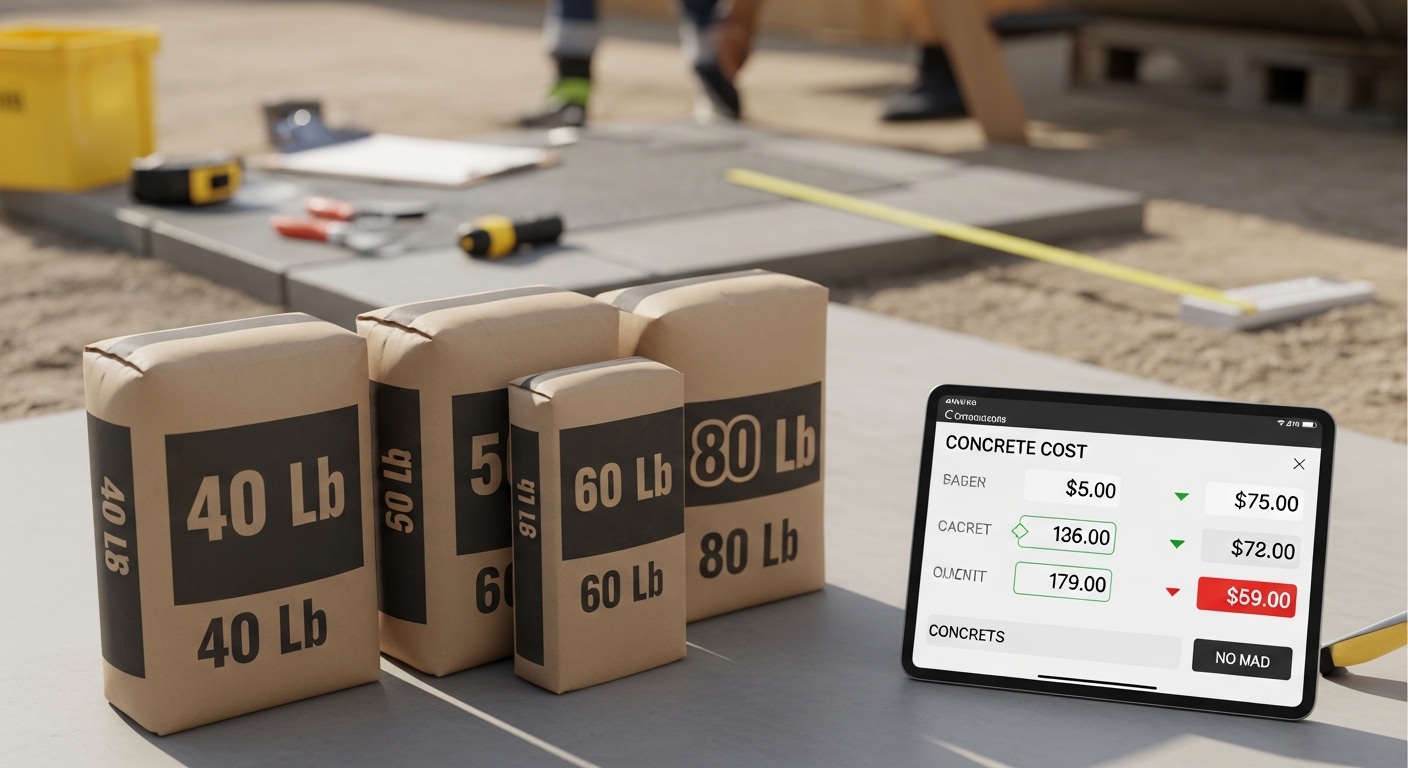
Concrete mix is commonly sold in several standard sizes. Each size produces a specific yield after mixing with water.
Common Bag Sizes and Yields
| Bag Size | Approx Yield | Best For |
|---|---|---|
| 40 lb | 0.30 cubic ft | Small repairs, posts |
| 50 lb | 0.37 cubic ft | Light DIY jobs |
| 60 lb | 0.45 cubic ft | Medium tasks |
| 80 lb | 0.60 cubic ft | Slabs, patios, driveways |
Key Insight
Bigger bags usually provide:
✅ Better value per cubic foot
✅ Fewer bags to carry
✅ Less packaging waste
✅ Faster mixing
But they are heavier and harder to handle.
Your calculator results depend heavily on which one you choose.
How Bag Size Changes Calculator Results
Let’s calculate a simple slab:
Project size:
- 10 ft × 10 ft × 4 inches thick
- Volume = 33.3 cubic feet
Now compare bag requirements.
Using 40 lb bags
- Yield: 0.30
- Bags needed: 111
- Price $5 each
- Total = $555
Using 80 lb bags
- Yield: 0.60
- Bags needed: 56
- Price $8 each
- Total = $448
Savings = $107
Same concrete. Same slab. Different bag size. Huge price difference.
This is exactly why your Concrete Calculator Results must include bag size selection.
The Hidden Cost of Choosing the Wrong Bag Size
Choosing incorrectly can create unexpected problems.
Common Mistakes
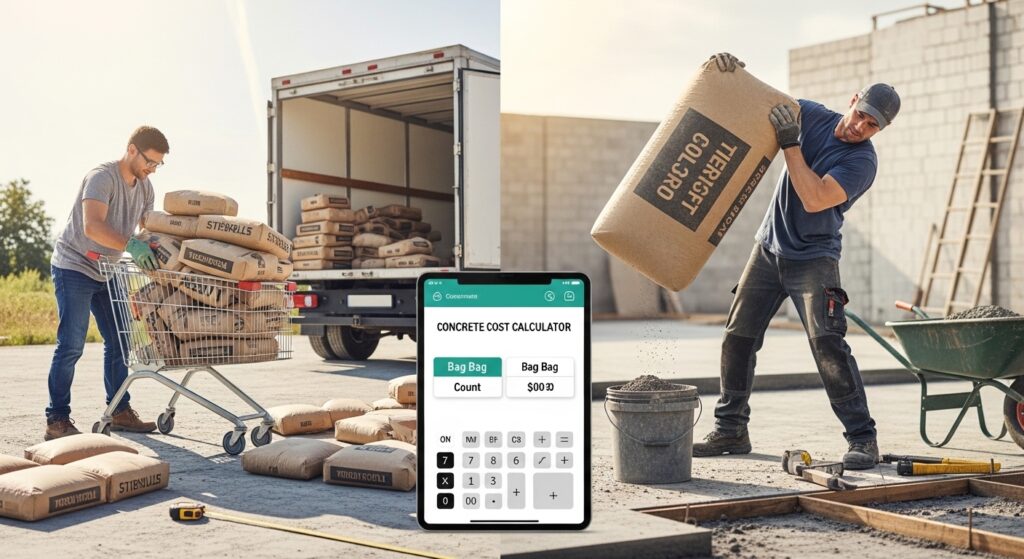
Buying too many small bags
- More trips
- Higher cost
- Extra waste
Buying very large bags for small jobs
- Hard to carry
- Wasted leftover mix
- Physical strain
Ignoring yield differences
- Underordering
- Extra delivery fees
- Project delays
Your concrete calculator prevents these mistakes by instantly converting volume into the most cost-effective number of bags.
How Price Per Bag Affects Total Cost
Prices vary by:
- Brand
- Strength (PSI rating)
- Location
- Season
- Store discounts
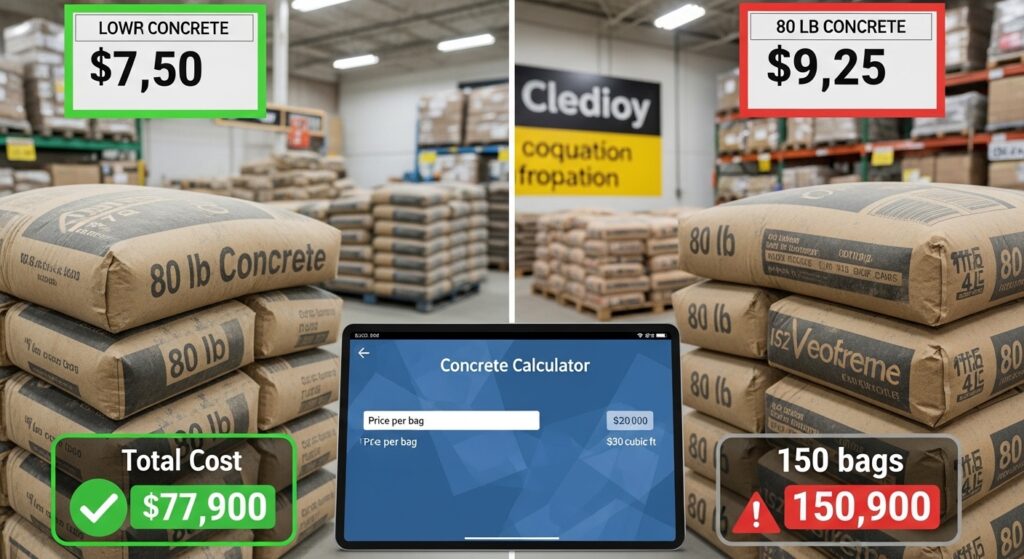
Two stores may sell the same 80 lb bag for:
- Store A → $7.50
- Store B → $9.25
If you need 150 bags, the difference becomes:
$262.50 extra
That’s why smart calculators include price-per-bag input fields.
Pro Tip
Always calculate:
Cost per cubic foot = Price ÷ Yield
This reveals the true cheapest option.
Formula Used in a Concrete Cost Calculator
Here’s how most professional calculators work:
Step 1 – Volume
Length × Width × Thickness
Step 2 – Convert
Cubic feet or cubic yards
Step 3 – Bag count
Volume ÷ Yield per bag
Step 4 – Add waste (5–10%)
Step 5 – Multiply by price
Final result:
Total Material Cost
This automatic math saves time and prevents mistakes.
Bag Size vs Ready-Mix: Which Is Cheaper?
For large projects, bagged concrete may not be economical.
Bagged Concrete
Best for:
- Repairs
- Posts
- Small slabs
- DIY work
Ready Mix
Best for:
- Driveways
- Foundations
- Large patios
- Commercial work
Rule of Thumb
If you need:
- Less than 1 yard → bags
- More than 1–2 yards → ready mix
Your Concrete Calculator Results should compare both options.
How to Choose the Best Bag Size for Your Project
Think about:
Project size
Small → 40–50 lb
Medium → 60 lb
Large → 80 lb
Physical strength
Heavy bags may require help
Budget
Compare cost per cubic foot
Time
Fewer bags = faster mixing
Waste
Larger bags reduce packaging waste
Benefits of Using an Online Concrete Cost Calculator
Using a smart calculator like the one on ConcreteCostCalculator.org gives you:
- Instant bag count
- Automatic yield conversion
- Waste allowance included
- Price comparison
- Budget planning
- Zero manual math
- Accurate estimates
This removes guesswork completely.
Faqs about Concrete Calculator Results
Q1: How many 80 lb bags make 1 cubic yard?
Ans: About 45 bags.
Q2: Which bag size is cheapest?
Ans: Usually 80 lb, but check local pricing.
Q3: Should I add extra bags?
Ans: Yes, always add 5–10% waste.
Q4: Can a calculator reduce overspending?
Ans: Yes. It provides exact bag count and total cost instantly.
Q5: Is bagged concrete cheaper than ready mix?
Ans: Only for small projects.
Conclusion:
Bag size and price might look like small details, but they dramatically impact your Concrete Cost Calculator results.
Choosing the wrong size can:
- Increase costs
- Waste time
- Create shortages
- Cause delays
Choosing correctly can:
- Save money
- Reduce labor
- Improve efficiency
- Make planning easier
Before starting any concrete project, always:
✅ Measure carefully
✅ Enter correct bag size
✅ Add local prices
✅ Include waste
✅ Use a reliable calculator