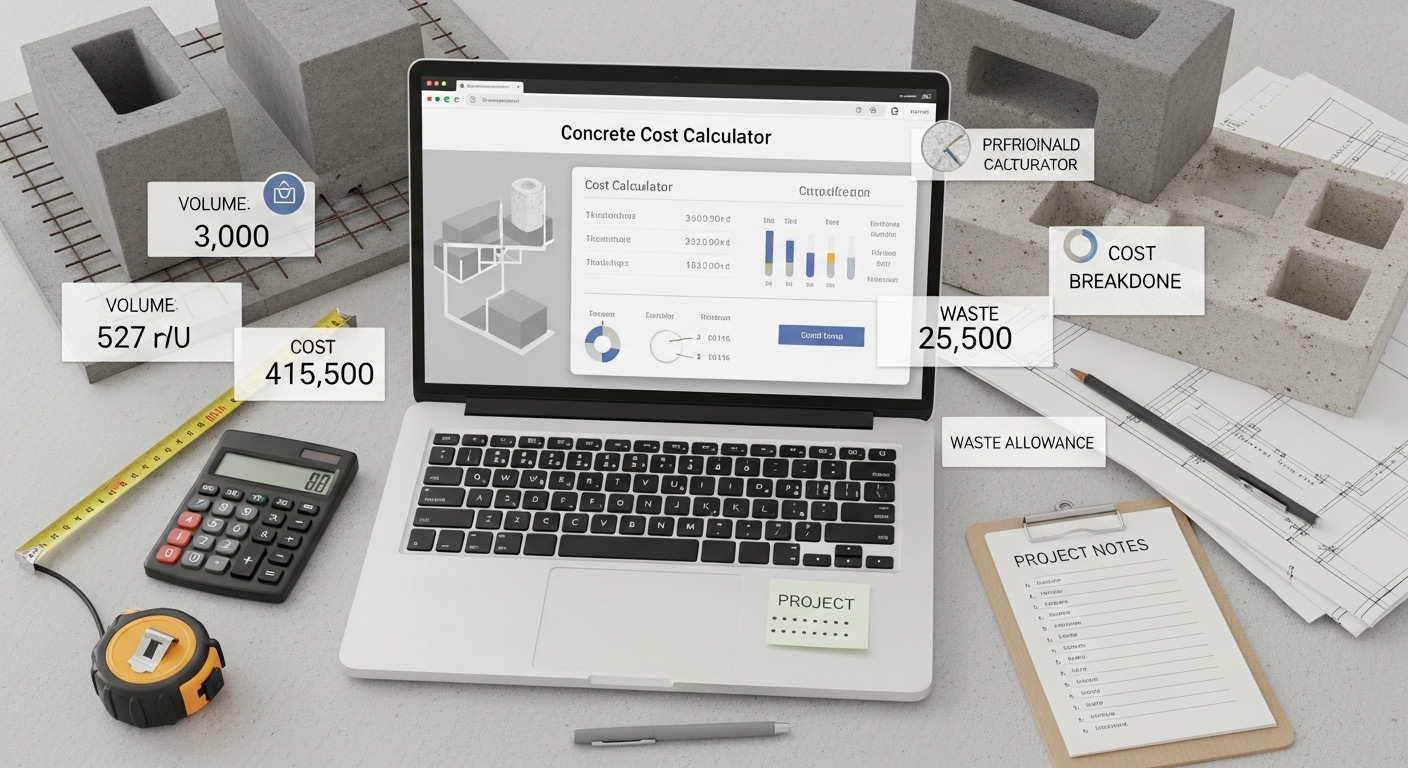
Planning a concrete project, whether it’s a driveway, patio, foundation, or staircase, requires careful budgeting to avoid overspending and material shortages. Miscalculating concrete volume or cost can lead to wasted money, delays, or project failure. Fortunately, modern online concrete cost calculators simplify the process, allowing you to plan your concrete budget accurately and efficiently.
In this guide, we will explore how to plan your concrete budget, how a concrete cost calculator works, tips for accurate estimation, and common mistakes to avoid.
Why Planning Your Concrete Budget Matters
Concrete projects are often more expensive than anticipated due to miscalculations or overlooked costs. Planning your concrete budget helps you:
- Avoid Overspending – Prevent ordering too much concrete or paying for unnecessary labor.
- Minimize Wastage – Ensures you purchase the right amount of concrete for your project.
- Ensure Project Efficiency – Accurate budgeting reduces delays caused by reordering or mismanagement.
- Make Informed Decisions – Compare costs for different types of concrete, project sizes, and labor options.
Even small errors in estimating concrete volume or thickness can lead to thousands of dollars in additional costs. Using a concrete calculator removes the guesswork and gives you reliable results.
How a Concrete Cost Calculator Helps
A concrete cost calculator is an online tool designed to calculate the amount of concrete needed for your project and provide an estimated cost. Here’s how it helps:
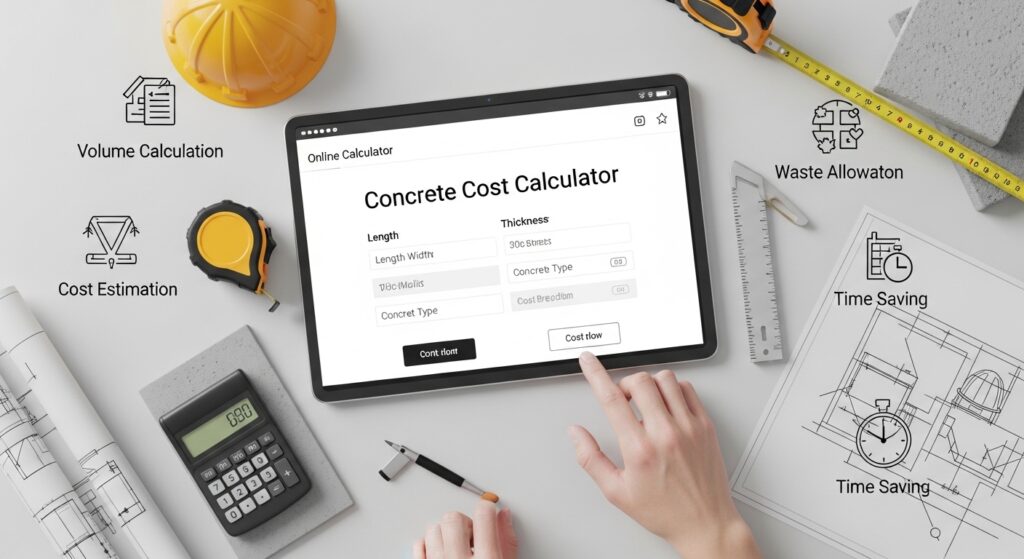
1. Accurate Volume Calculation
Calculators allow you to input the dimensions of your project length, width, and thickness and automatically calculate the required volume in cubic meters or cubic yards.
2. Cost Estimation
Based on your location and selected concrete mix, the calculator estimates the total cost, including materials, delivery, and sometimes labor.
3. Waste Allowance
Concrete calculators include a margin for waste (usually 5–10%) to ensure you don’t run short during construction.
4. Time-Saving
Manual calculations can be complicated and error-prone. Online calculators provide instant results in a matter of seconds.
5. Beginner-Friendly
Even if you are a DIY enthusiast with no construction experience, concrete cost calculators are easy to use and understand.
Step-by-Step Guide to Planning Your Concrete Budget
Step 1: Define Your Project
Before using a calculator, clearly define the type of project you are undertaking. Common projects include:
- Driveways and walkways
- Patios and decks
- Garage or basement floors
- Foundations for sheds or small buildings
- Stairs and steps
Knowing the exact project type helps you select the correct concrete mix and thickness.
Step 2: Measure Your Area
Measure the dimensions of your project area accurately:
- Length and Width: Measure in meters or feet.
- Thickness: Standard slab thickness is usually 4–6 inches, but this may vary depending on load requirements.
Tip: Double-check measurements to avoid underestimation or overestimation.
Step 3: Choose the Right Concrete Mix
Concrete comes in different types depending on strength and purpose:
- Standard Concrete: Suitable for most DIY projects.
- High-Strength Concrete: Required for heavy loads, such as driveways or commercial floors.
- Decorative Concrete: Used for stamped or colored surfaces.
- Fiber-Reinforced Concrete: Prevents cracking in slabs and driveways.
Selecting the right mix ensures durability and prevents additional costs from structural issues.
Step 4: Use a Concrete Cost Calculator
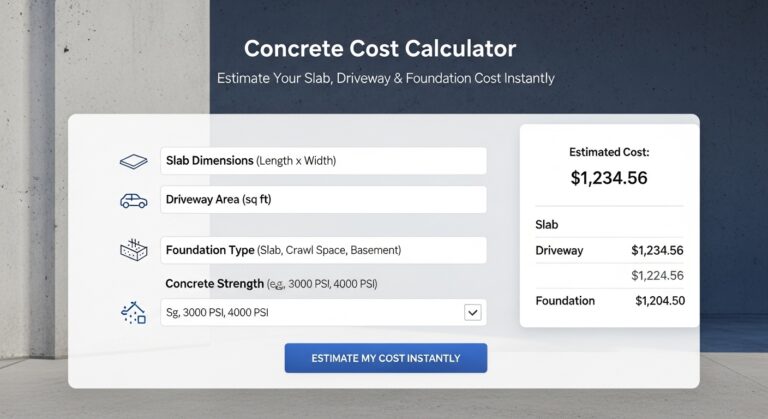
Input your project dimensions and concrete type into a reliable calculator, such as the Concrete Cost Calculator
The calculator will provide:
- Concrete volume required
- Estimated cost of materials
- Waste allowance
- Optional delivery charges
Step 5: Include Additional Costs
Your budget should also consider:
- Labor Costs: If hiring a contractor, include hourly or project-based labor fees.
- Delivery Charges: Concrete delivery can vary depending on distance and volume.
- Formwork and Reinforcement: Costs for molds, supports, and reinforcement bars.
- Finishing Costs: Troweling, stamping, sealing, or decorative finishes.
Step 6: Plan for Contingencies
Add 5–10% extra to your budget to account for unexpected expenses such as:
- Weather delays
- Material price fluctuations
- Minor calculation errors
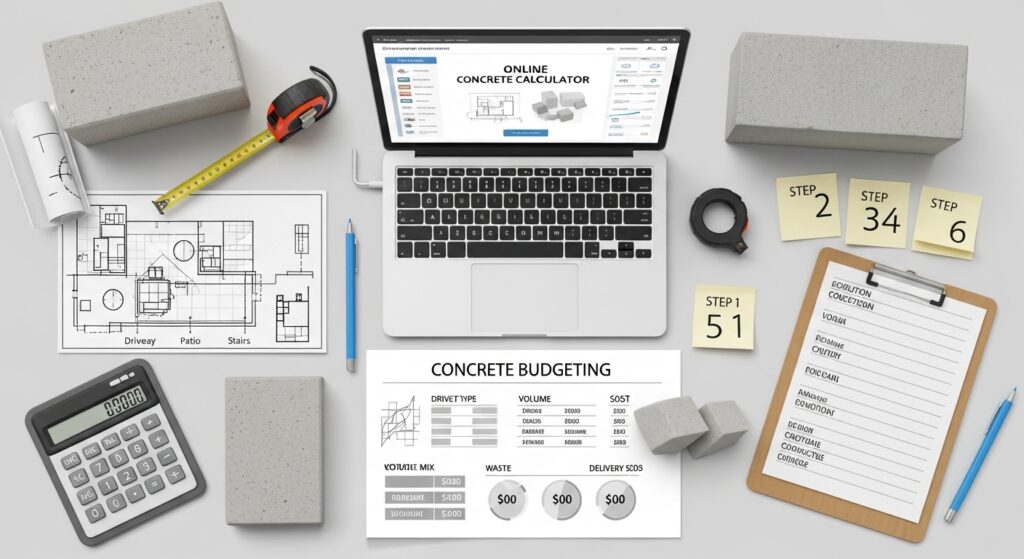
Benefits of Using a Concrete Cost Calculator for Budget Planning
- Accuracy: Reduces human error in volume and cost calculations.
- Efficiency: Saves time compared to manual methods.
- Transparency: Breaks down costs into material, labor, and waste components.
- Flexibility: Allows adjustments for different project sizes and concrete types.
- Cost-Effectiveness: Prevents over-purchasing concrete and unnecessary spending.
Common Mistakes to Avoid When Planning Your Concrete Budget
- Ignoring Waste Allowance: Skipping waste calculations can result in insufficient concrete.
- Incorrect Measurements: Miscalculating slab thickness or project area leads to inaccurate estimates.
- Selecting the Wrong Concrete Mix: Choosing an inappropriate mix can compromise durability.
- Overlooking Labor Costs: Many beginners forget to include professional labor charges.
- Not Considering Delivery Fees: Local delivery charges can add a significant amount to your budget.
Tips for Getting the Most Accurate Estimate
Top Online Concrete Cost Calculators to Use
- Concrete Cost Calculator (Our Site) – Provides volume, cost breakdown, and waste allowance.
- Calculator.net Concrete Calculator – Simple interface, ideal for basic DIY projects.
- The Concrete Network Calculator – Detailed cost estimation including specialty concrete types.
- Quikrete Concrete Calculator – Perfect for bagged concrete projects and small DIY work.
- HomeAdvisor Concrete Calculator – Offers general cost estimation including labor.
Using these tools ensures accurate budgeting and better planning for any concrete project.
FAQs About Planning Your Concrete Budget
Q1. How much concrete do I need for my project?
Ans: Use a concrete cost calculator to enter your project dimensions and thickness. The calculator will determine the required volume in cubic meters or cubic yards.
Q2. Can I calculate the cost for decorative concrete?
Ans: Yes, most calculators allow you to select specialty concrete types like stamped, colored, or fiber-reinforced concrete.
Q3. Should I include labor in my budget?
Ans: Absolutely. Labor costs can be a significant part of your budget, especially for large or complex projects.
Q4. How accurate are concrete cost calculators?
Ans: They are highly accurate if you enter precise dimensions, choose the correct concrete type, and include waste allowance.
Q5. Are online concrete calculators free to use?
Ans: Yes. Tools like Concrete Cost Calculator are free and accessible from any device with internet access.
Q6. Can I plan a budget for a large commercial project using a calculator?
Ans: Yes, choose advanced calculators that include labor, waste, and regional pricing to get a precise estimate.
Conclusion
Planning your concrete budget is crucial for a successful project. Using a concrete cost calculator helps you:
- Determine the exact amount of concrete needed
- Estimate costs for materials, labor, and delivery
- Include waste allowances for safety
- Avoid overspending and project delays