Concrete is known for its strength and durability, but intense heat, smoke, and fire exposure can seriously damage its surface. After a house fire, garage accident, or industrial blaze, you may notice black soot stains, cracks, discoloration, burnt smells, and weakened concrete.
The good news?
Fire-damaged concrete can often be cleaned, restored, and repaired without full replacement saving you thousands of dollars.
In this complete guide, you’ll learn:
- How fire affects concrete
- Step-by-step cleaning methods
- Best tools and chemicals
- DIY vs professional repair
- Safety tips
- Restoration costs
- When replacement is necessary
- Pro maintenance tips
What Happens to Concrete After a Fire?
Although concrete doesn’t burn, extreme temperatures (300–1000°C) cause several problems:
Common Fire Damage Types
- Soot and smoke stains
- Surface discoloration
- Spalling (flaking or chipping)
- Cracks
- Loss of strength
- Chemical contamination
- Odor absorption
Heat forces moisture inside the concrete to expand, which leads to internal pressure and surface breakage.
If not cleaned quickly, stains and damage can become permanent.
Why You Should Clean Fire-Damaged Concrete Quickly
Delaying cleanup can cause:
- Permanent black stains
- Mold growth
- Weak structural strength
- Bad odor retention
- Higher repair costs later
Cleaning early helps:
Restore appearance
Prevent deeper damage
Improve safety
Reduce replacement costs
Increase property value
Tools & Materials You will Need
Before starting, gather these supplies:
Basic Tools
- Stiff brush or broom
- Pressure washer
- Scraper
- Bucket
- Mop
Cleaning Solutions
- Baking soda
- White vinegar
- Dish soap
- Degreaser
- Trisodium phosphate (TSP)
- Concrete cleaner
- Bleach (for odor removal)
Safety Gear
- Gloves
- Goggles
- Mask/respirator
- Rubber boots
Step-by-Step Guide to Cleaning Fire-Damaged Concrete
Remove Loose Debris & Ash
Start with dry cleaning.
How to do it:
- Sweep away ash and burnt particles
- Use a vacuum for fine soot
- Scrape stuck materials gently
Pro Tip:
Never add water first it can turn ash into hard black paste stains.
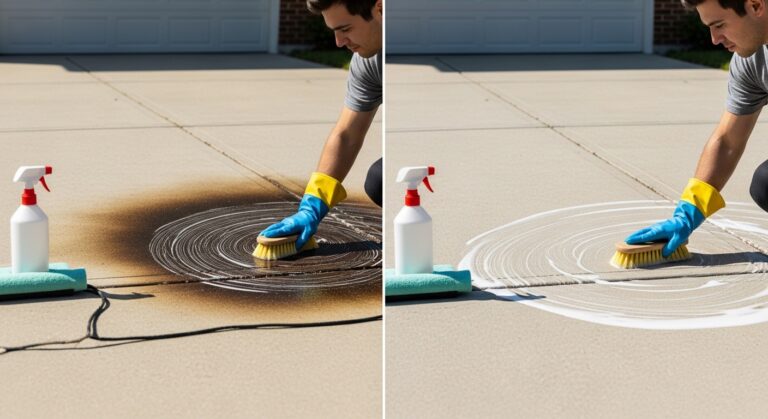
Wash With Soap & Warm Water
This removes light soot and smoke residue.
Steps:
- Mix warm water + dish soap
- Scrub surface with stiff brush
- Rinse thoroughly
Best for:
- Light stains
- Small areas
- Indoor floors
Use Baking Soda or Vinegar (Natural Method)
If you prefer eco-friendly cleaning:
Baking Soda Method
- Sprinkle on stain
- Add water to make paste
- Scrub and rinse
Vinegar Method
- Spray white vinegar
- Let sit 15 minutes
- Scrub and rinse
Great for:
- Mild smoke stains
- Odor removal
Deep Clean With Concrete Degreaser or TSP
For heavy fire damage, you’ll need stronger cleaners.
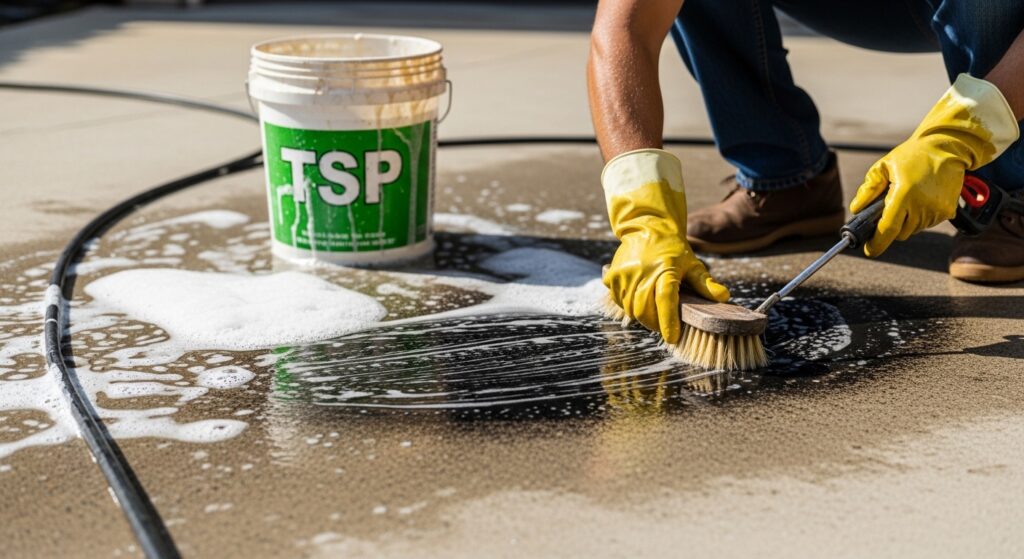
TSP Cleaning Method
- Mix TSP with water
- Apply to surface
- Scrub aggressively
- Let sit 10–15 minutes
- Rinse with pressure washer
Removes:
- Grease
- Soot
- Smoke stains
- Chemical residue
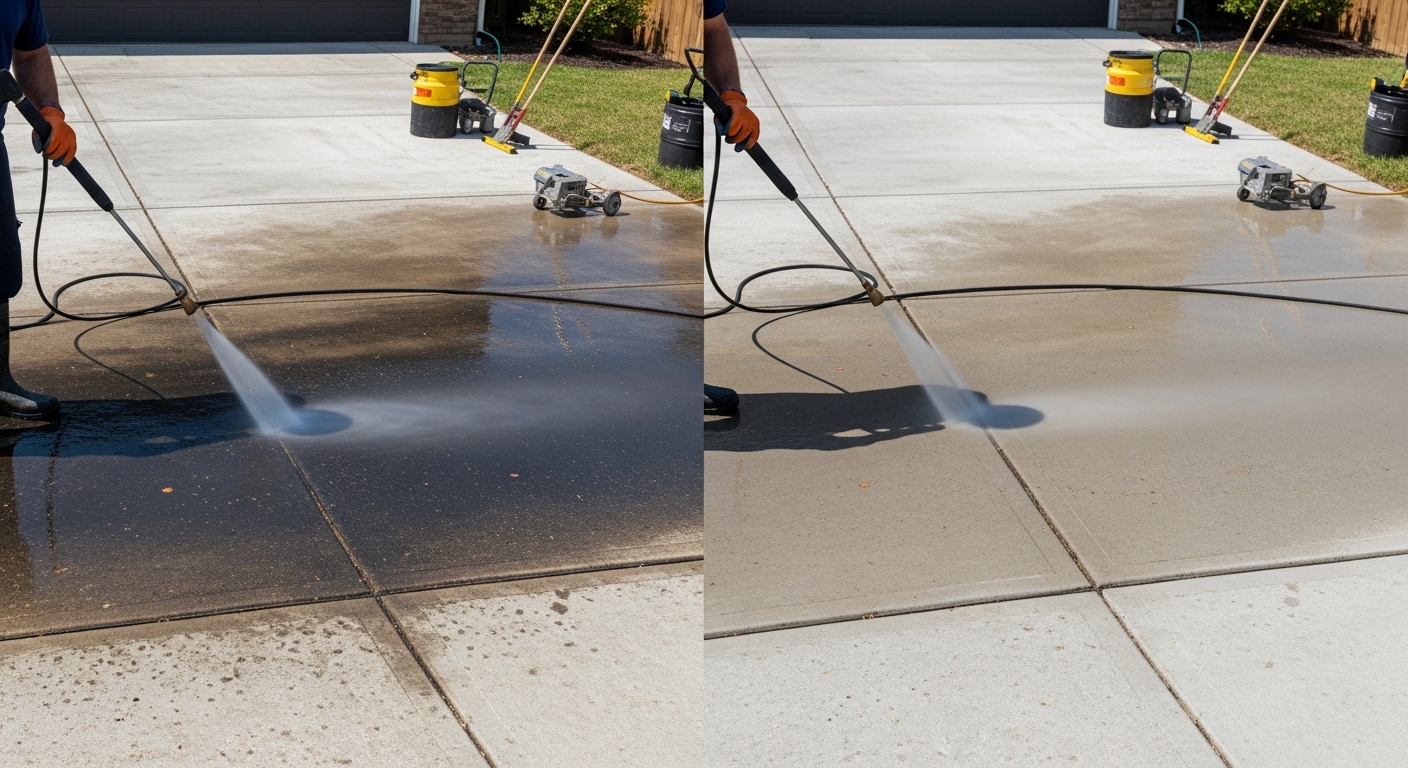
Pressure Washing
Pressure washing is one of the most effective methods.
Recommended settings:
- 2500–3000 PSI
- Wide spray nozzle
Avoid:
- Too high pressure (can damage surface)
This removes:
- Embedded dirt
- Deep stains
- Odors
Odor & Smoke Smell Removal
Fire smell can stay trapped in porous concrete.
Solutions:
- Bleach solution (1:10 ratio)
- Hydrogen peroxide
- Baking soda overnight
- Commercial odor neutralizer
Allow full drying afterward.
How to Repair Fire-Damaged Concrete
Cleaning alone isn’t enough if structural damage exists.
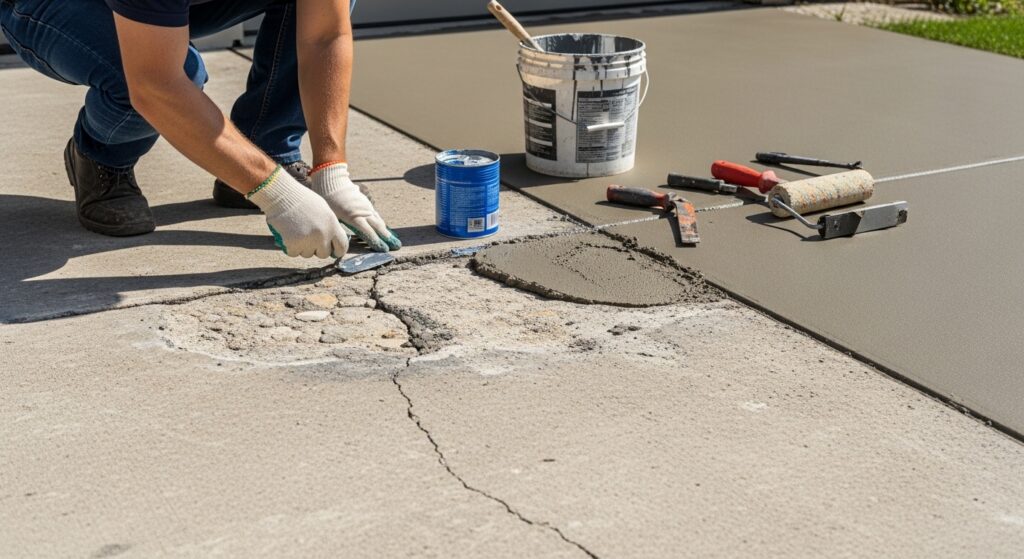
Common Repairs
Crack Filling
Use epoxy or concrete filler
Spalling Repair
Patch with repair mortar
Resurfacing
Apply concrete overlay
Sealing
Add protective concrete sealer
Fire-Damaged Concrete Cleaning Cost
Since your site focuses on costs, this section is great for SEO.
Average Costs
| Service | Cost Range |
|---|---|
| DIY cleaning | $50 – $150 |
| Pressure washing | $100 – $300 |
| Chemical cleaning | $200 – $500 |
| Professional restoration | $500 – $2000+ |
| Full replacement | $3000 – $10,000+ |
Use a Concrete Cost Calculator to estimate repair or replacement expenses accurately.
Pro Tips & Tricks
Act fast after fire
Test cleaner on small area first
Avoid harsh acids
Use hot water for better results
Seal concrete after cleaning
Wear protective gear
Don’t mix chemicals
Mistakes to Avoid
- Using acid cleaners
- Scrubbing with metal tools
- Skipping safety gear
- Over-pressure washing
- Ignoring cracks
When Should You Replace Instead of Clean?
Replace concrete if:
- Deep structural cracks
- Severe spalling
- Loss of strength
- Reinforcement exposed
- More than 40% surface damaged
In these cases, cleaning is not cost-effective.
FAQs about Fire-Damaged Concrete
Q1. Can fire damage concrete permanently?
Yes, extreme heat can permanently damage concrete. High temperatures cause moisture inside the concrete to expand, leading to cracks, spalling, discoloration, and reduced strength. Light surface damage can be cleaned, but severe structural damage may require repair or replacement.
Q2. How do you remove black soot stains from concrete?
Ans: You can remove soot stains by:
- Sweeping loose ash first
- Scrubbing with warm water and dish soap
- Using baking soda paste or vinegar
- Applying TSP or concrete degreaser
- Pressure washing for deep stains
For heavy smoke stains, chemical cleaners or professional cleaning may be necessary.
Q3. Is pressure washing safe for fire-damaged concrete?
Ans: Yes, pressure washing is safe and very effective when done correctly. Use:
- 2500–3000 PSI
- Wide spray nozzle
Avoid very high pressure because it can chip or weaken the surface.
Q4. What is the best cleaner for fire-damaged concrete?
Ans: The best cleaners include:
- Trisodium phosphate (TSP)
- Commercial concrete degreasers
- Baking soda
- White vinegar
- Mild bleach solution for odor removal
For heavy damage, professional-grade cleaners work better than household products.
Q5. How long does it take to clean fire-damaged concrete?
Ans: It depends on the damage level:
- Light stains: 1–2 hours
- Medium stains: 3–5 hours
- Heavy restoration: 1–2 days
Large areas or deep cleaning may take longer.
Conclusion:
Cleaning fire-damaged concrete may look challenging, but with the right tools and techniques, you can restore both strength and appearance without expensive replacement.
Start with simple methods like sweeping and soap washing. For tougher stains, use degreasers and pressure washing. Repair cracks quickly and seal the surface to protect it long-term.
If damage is severe, calculate your costs using a Concrete Cost Calculator to decide whether repair or replacement makes more financial sense.
With proper care, your concrete can look almost brand new again.