Introduction
Concrete is one of the most widely used construction materials in the world. From small residential patios to massive commercial foundations, almost every construction project depends on accurate concrete estimation. However, one common mistake people make is assuming that residential and commercial concrete projects cost the same.
They don’t.
The size, complexity, labor, materials, equipment, and regulations vary significantly between the two. That’s exactly why using a Concrete Cost Calculator becomes essential.
A professional concrete cost calculator helps you estimate:
- Concrete volume
- Material requirements
- Waste allowance
- Labor costs
- Delivery charges
- Total project cost
Whether you’re a homeowner building a driveway or a contractor managing a commercial building foundation, accurate cost estimation can save thousands of dollars.
In this guide, you’ll learn:
- Differences between residential and commercial concrete projects
- How costs are calculated
- Why pricing varies
- How to estimate correctly
- How an online concrete calculator helps
- Real examples and tips
- FAQs
Let’s start from the basics.
What Is a Concrete Cost Calculator?
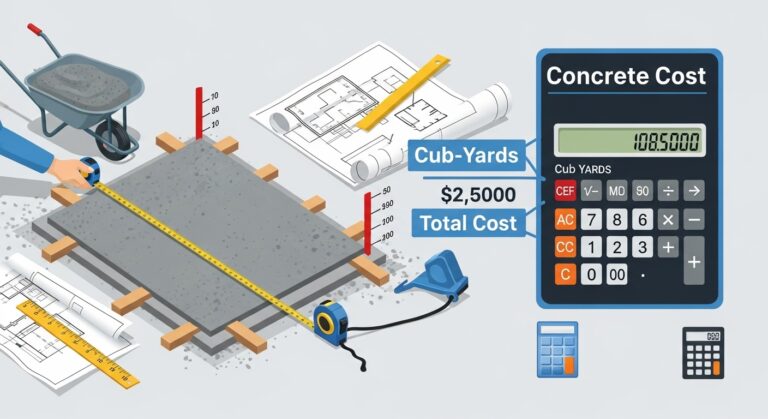
A concrete cost calculator is an online or digital tool that estimates how much concrete you need and how much your project will cost.
Instead of manual calculations, the calculator automatically:
- Measures volume (length × width × thickness)
- Converts units (feet, meters, inches)
- Adds waste percentage
- Estimates material cost
- Calculates total price
It removes guesswork and human errors.
Today, most contractors and DIY homeowners prefer calculators because they are:
- Faster
- More accurate
- Beginner-friendly
- Reliable
- Time-saving
Residential vs Commercial Concrete Projects: What’s the Difference?
Although both use concrete, the project scale and requirements are very different.
Residential Projects Include:
- Driveways
- Sidewalks
- Patios
- Garage floors
- House foundations
- Small slabs
- Walkways
Commercial Projects Include:
- Office buildings
- Warehouses
- Parking lots
- Factories
- Shopping centers
- Large foundations
- Multi-story structures
Because of these differences, cost calculation methods change dramatically.
Characteristics of Residential Projects
Residential jobs are usually:
- Smaller in size
- Less complex
- Lower labor requirements
- Shorter timelines
- DIY-friendly
Most homeowners only need 1–10 cubic meters of concrete.
Typical Residential Costs
Costs generally depend on:
- Slab thickness
- Site preparation
- Concrete mix type
- Labor
- Finishing style
Average Residential Prices
| Item | Estimated Cost |
|---|---|
| Concrete per cubic meter | $100–$150 |
| Labor | $3–$8 per sq ft |
| Finishing | $2–$6 per sq ft |
| Delivery | $50–$150 |
Example Residential Calculation
Driveway: 6m × 4m × 0.15m
Volume = 3.6 m³
Add 7% waste = 3.85 m³
If concrete costs $120/m³:
Total = $462
Simple. Predictable. Affordable.
Characteristics of Commercial Projects
Commercial construction is much more demanding.
These projects are:
- Large-scale
- Heavy-load structures
- Engineering-intensive
- Equipment-heavy
- Time-sensitive
Concrete requirements often exceed 100–1000+ cubic meters.
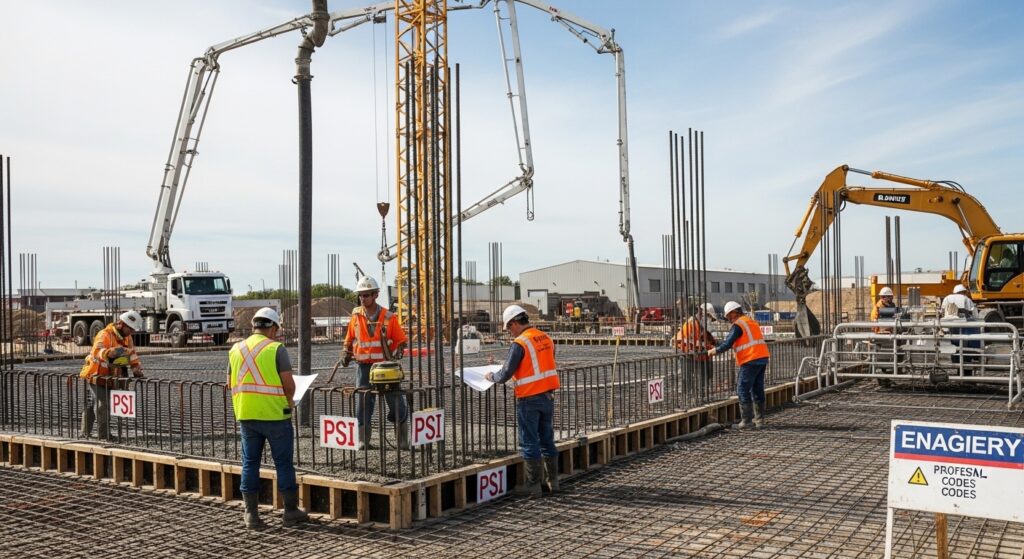
Why Commercial Costs Are Higher
Several additional factors increase costs:
1. Stronger Concrete Mix
Higher PSI ratings required.
2. Heavy Equipment
Pumps, cranes, laser screeds.
3. Skilled Labor
Engineers, supervisors, certified workers.
4. Regulations & Inspections
Building codes increase complexity.
5. Reinforcement
Steel bars, mesh, fiber additives.
Typical Commercial Prices
| Item | Estimated Cost |
|---|---|
| Concrete per cubic meter | $130–$200 |
| Labor | $8–$18 per sq ft |
| Equipment | $500–$3000+ |
| Reinforcement | Extra |
Commercial projects are expensive but necessary for durability.
Key Cost Differences Between Residential and Commercial
| Factor | Residential | Commercial |
|---|---|---|
| Project Size | Small | Very Large |
| Complexity | Low | High |
| Concrete Strength | Standard | High PSI |
| Equipment | Basic | Advanced |
| Labor | Few workers | Skilled teams |
| Cost | Lower | Higher |
This is why a one-size-fits-all estimate never works.
How Concrete Volume Affects Cost
Concrete cost is directly tied to volume.
Formula:
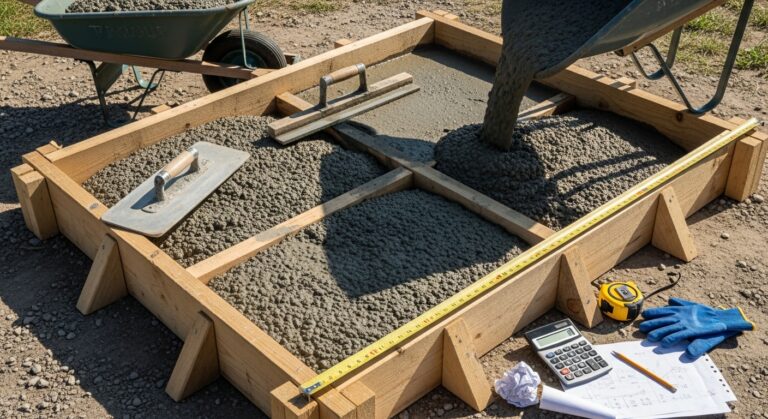
Volume = Length × Width × Thickness
Even small thickness increases raise cost significantly.
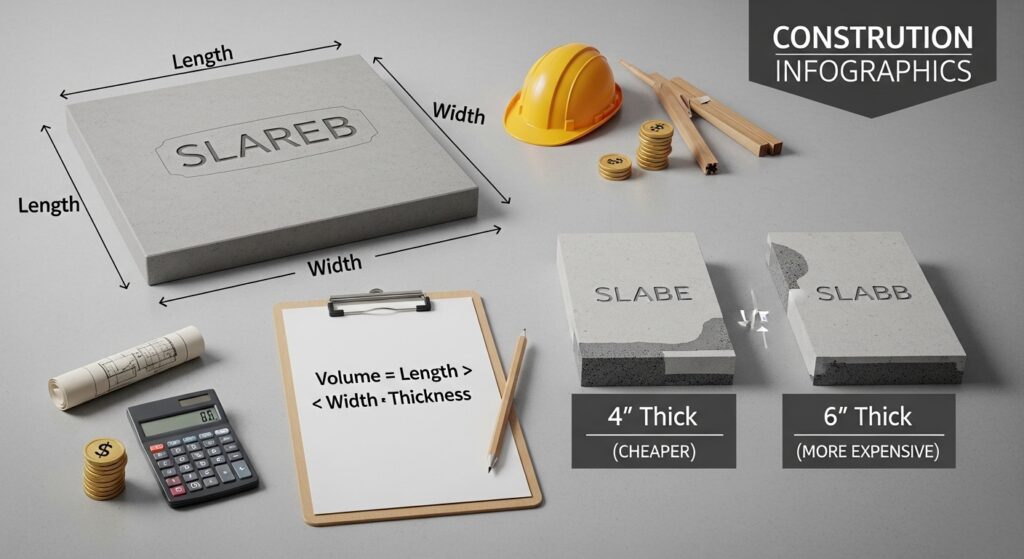
Example:
- 4 inches thick → cheaper
- 6 inches thick → 50% more concrete
For commercial slabs, small changes can add thousands of dollars.
That’s why accurate calculation is critical.
Why You Must Add Waste in Both Projects
Every project produces waste.
Common causes:
- Spillage
- Over-excavation
- Uneven ground
- Formwork leaks
- Finishing adjustments
Recommended Waste Percentage
| Project Type | Waste |
|---|---|
| Residential | 5–7% |
| Commercial | 8–10% |
Without waste allowance, you risk:
- Shortages
- Re-orders
- Delivery fees
- Delays
A good concrete calculator automatically adds waste.
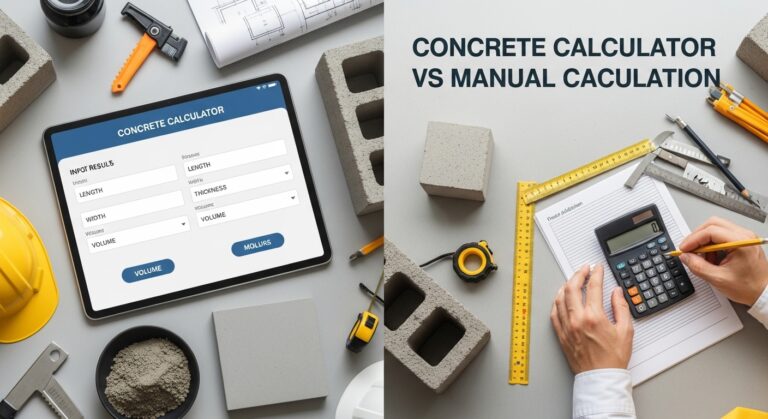
Manual Calculation vs Concrete Cost Calculator
Manual Method Problems
- Time-consuming
- Unit conversion mistakes
- Forgetting waste
- Wrong estimates
Benefits:
- Automatic calculations
- Instant results
- Unit conversions
- Waste included
- Cost breakdown
- Zero math stress
Perfect for both DIY users and contractors.
Step-by-Step: How to Use a Concrete Cost Calculator
- Enter project type
- Add length, width, thickness
- Select units
- Add waste percentage
- Set price per cubic meter
- Click calculate
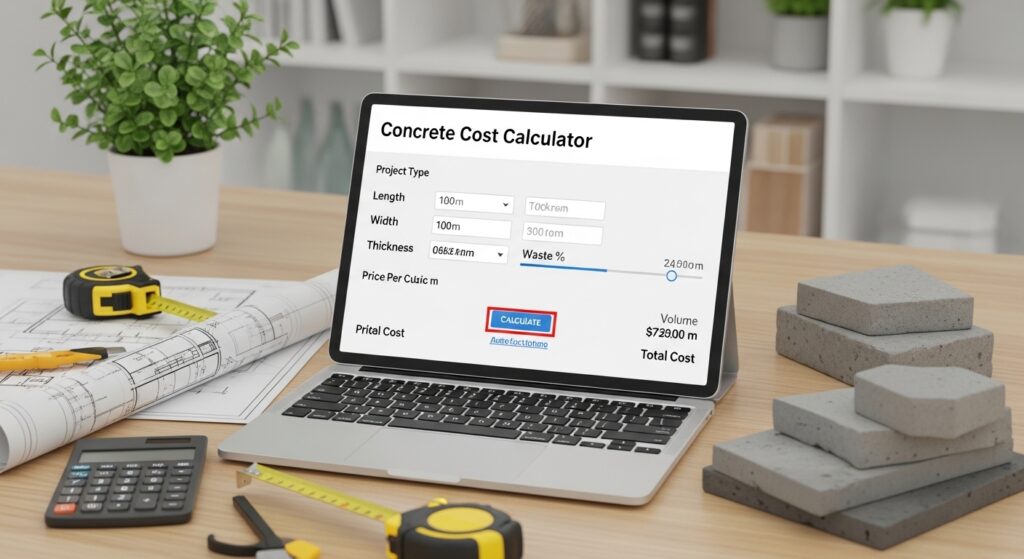
You instantly get:
- Volume
- Required concrete
- Total cost
Simple and accurate.
Real-Life Comparison Example
Residential Patio
- 3m × 3m × 0.1m
- Volume = 0.9 m³
- Cost ≈ $120
Commercial Warehouse Floor
- 50m × 40m × 0.2m
- Volume = 400 m³
- Cost ≈ $60,000+
Huge difference.
This proves why proper calculation matters even more for commercial work.
Tips to Reduce Concrete Costs
Regardless of project type:
- Measure accurately
- Avoid over-excavation
- Use correct thickness
- Choose right mix
- Order once
- Use a calculator
Small savings add up quickly.
Common Mistakes to Avoid
Many people:
Order exact volume
Forget waste
Guess thickness
Ignore delivery fees
Underestimate labor
These mistakes cause budget overruns.
Always calculate carefully.
FAQs about Concrete Cost Calculator
Q1: Is a concrete calculator accurate?
Ans: Yes. It provides highly accurate estimates when dimensions are correct.
Q2: Do commercial projects need higher waste?
Ans: Yes. Large projects usually need 8–10%.
Q3: Can homeowners use calculators?
Ans: Absolutely. They are beginner-friendly.
Q4: What unit should I use?
Ans: Meters or feet both work; calculators convert automatically.
Q5: Why is commercial concrete more expensive?
Ans: Because of scale, strength, equipment, and labor requirements.
Conclusion
Concrete cost estimation is not the same for every project.
Residential jobs are smaller, simpler, and cheaper.
Commercial jobs are larger, more complex, and more expensive.
Using a Concrete Cost Calculator for commercial vs residential projects ensures:
- Accurate volume
- Proper waste allowance
- Better budgeting
- Fewer delays
- Lower overall cost
Instead of guessing, calculate smartly.
Whether you’re pouring a backyard patio or a massive warehouse slab, the right calculator saves time, money, and stress.