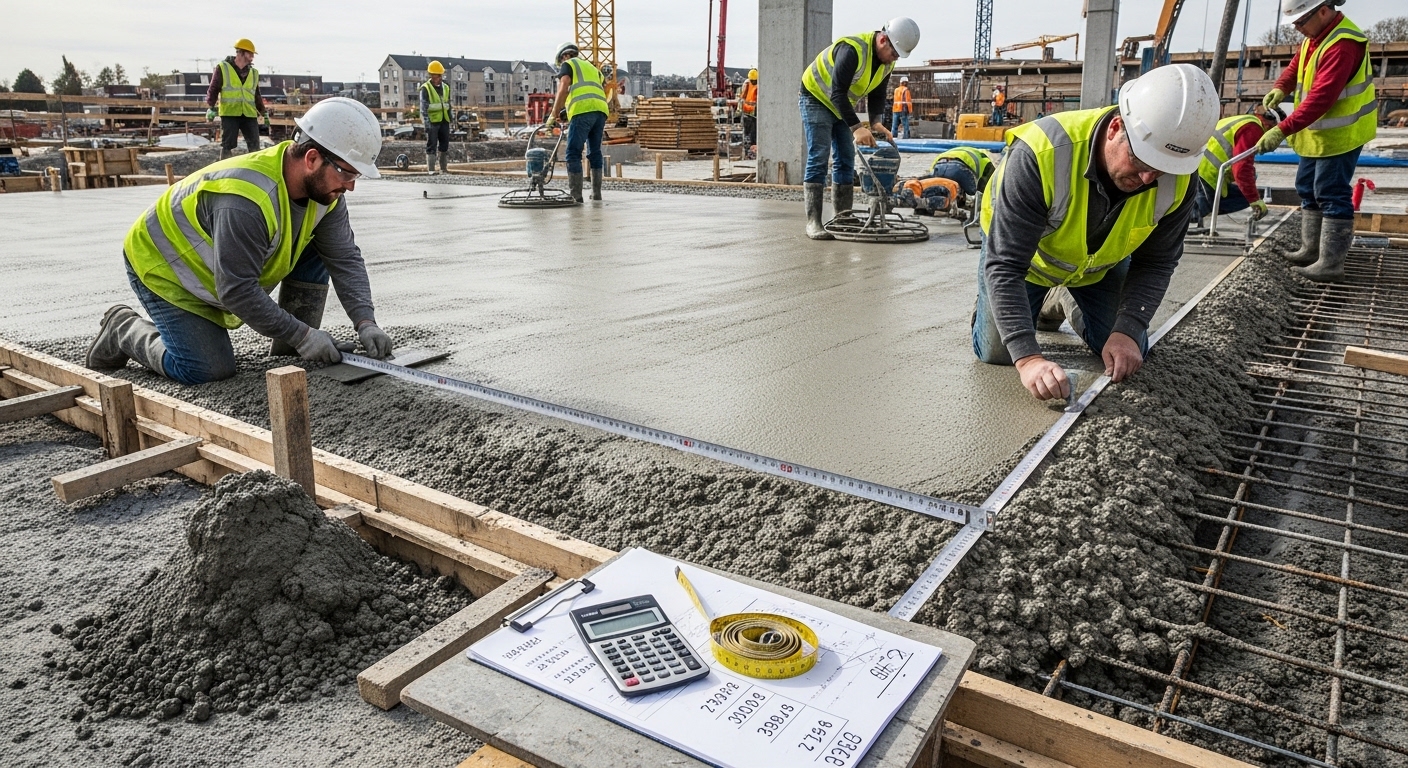
When planning a concrete project, most people focus on one main thing: how much concrete is needed. Whether you are pouring a slab, driveway, foundation, patio, stairs, or footing, accurate concrete calculation is essential for controlling costs and avoiding delays.
However, one critical factor is often overlooked concrete waste.
Failing to include waste in your concrete cost calculation can lead to serious problems such as under-ordering, project delays, extra delivery charges, and increased overall expenses. On the other hand, adding the correct waste allowance ensures smoother execution, accurate budgeting, and better project outcomes.
In this detailed guide, we’ll explain why adding waste is important, how much waste you should include, how it affects concrete costs, and how using an online concrete cost calculation can help you avoid costly mistakes.
What Is Concrete Waste?
Concrete waste refers to the extra concrete added beyond the exact calculated volume to account for real-world construction conditions. It covers unavoidable losses and adjustments that occur during:
- Mixing
- Transporting
- Pouring
- Leveling
- Finishing
Concrete is not poured in a perfectly controlled environment. Ground conditions, formwork quality, human error, and weather all affect how much concrete is actually used.
That’s why professionals never rely on exact volume alone they always include a waste factor.
Why Concrete Waste Is a Necessary Part of Every Project
Concrete waste is not a sign of poor planning it is a realistic allowance.
Here’s why waste is unavoidable:
1. Measurement Variations
Even small differences in slab thickness or excavation depth can increase required volume.
2. Uneven Ground Conditions
Soil settlement, slopes, and soft spots require extra concrete to fill voids.
3. Formwork Gaps
Poorly sealed or flexible formwork allows concrete to leak during pouring.
4. Spillage During Pouring
Concrete can spill from wheelbarrows, pumps, or buckets.
5. Finishing Adjustments
Leveling and surface finishing often require more material than initially planned.
Ignoring these realities almost always results in ordering too little concrete, which is more expensive than ordering slightly extra.
Common Causes of Concrete Waste
Understanding where waste comes from helps you estimate more accurately.
Measurement Errors
Misjudging dimensions especially thickness is one of the biggest causes of concrete shortages.
Over-Excavation
Digging deeper than planned increases the volume that must be filled with concrete.
Concrete Handling Loss
Loss occurs while transferring concrete from mixer to forms.
Weather Conditions
- Hot weather can cause rapid setting and discarded batches
- Rain can wash away fresh concrete
Human Error
Inconsistent pouring speed or poor coordination increases waste.
How Much Waste Should You Add?
The most common question is:
How much extra concrete should I add for waste?
The general industry standard is 5% to 10%, depending on the project.
- Simple projects → 5% waste
- Medium complexity projects → 7–8% waste
- Complex or irregular projects → 10% waste
This small percentage protects you from costly shortages without significantly increasing your budget.
Recommended Concrete Waste Percentage by Project Type
| Project Type | Waste Percentage |
|---|---|
| Concrete Slab | 5% |
| Driveway | 7% |
| Patio | 7–10% |
| Footings | 7% |
| Foundations | 5–8% |
| Stairs | 10% |
| Decorative Concrete | 10% |
Using these percentages ensures your concrete cost calculator reflects real-world conditions.
How Concrete Waste Impacts Cost Calculation
Concrete cost calculation is directly linked to volume. When waste is added, volume increases slightly but this is a controlled increase.
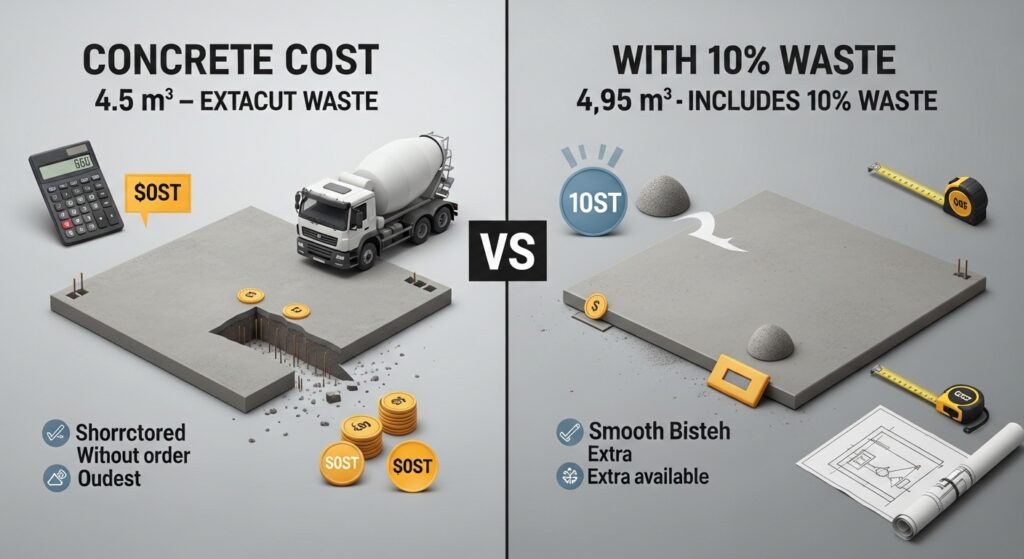
Example Without Waste:
- Slab size: 6m × 5m × 0.15m
- Volume: 4.5 cubic meters
Example With 10% Waste:
- Extra: 0.45 cubic meters
- Total: 4.95 cubic meters
Although the second option costs more upfront, it prevents:
- Emergency re-orders
- Extra delivery fees
- Labor downtime
- Inconsistent concrete batches
In most cases, ordering extra once is cheaper than ordering twice.
Manual Calculation vs Concrete Calculator (With Waste)
Manual Calculation
Manual estimation requires multiple steps:
- Calculate volume
- Convert units
- Add waste percentage
- Estimate cost
This process increases the chance of mistakes.
Using an Online Concrete Calculator
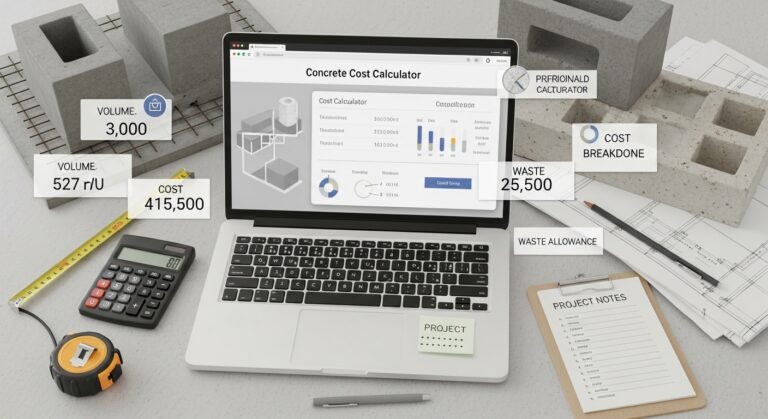
A concrete calculator:
- Automatically includes waste
- Converts units instantly
- Estimates cost accurately
- Reduces human error
- Saves time
For DIY users and professionals alike, calculators provide consistent and reliable results.
Mistakes People Make When Ignoring Concrete Waste
Many people try to save money by ordering exact concrete volume. This often backfires.
Common Mistakes:
- Ordering exact volume with 0% waste
- Rounding dimensions down instead of up
- Ignoring uneven ground
- Assuming no spillage will occur
These mistakes usually lead to:
- Delays
- Higher emergency costs
- Poor structural results
How to Reduce Waste Without Under-Ordering
Adding waste doesn’t mean being careless. You can still control costs.
Smart Waste Reduction Tips:
- Measure dimensions carefully
- Avoid over-excavation
- Use proper formwork
- Order the correct concrete mix
- Pour steadily and efficiently
The goal is controlled waste, not zero waste.
Real-Life Examples of Concrete Waste
Example 1: Patio Without Waste
A homeowner orders exact volume. During pouring, concrete runs short due to uneven soil.
Result: second delivery, higher cost, project delay.
Example 2: Driveway With Waste
Another homeowner adds 7% waste using a concrete calculator.
Result: smooth pour, no delays, leftover concrete used for repairs.
Lesson: planning for waste saves money and stress.
FAQs About Concrete Cost Calculation
Q1: Is adding concrete waste really necessary?
Ans: Yes. All professional estimates include waste.
Q2: Can adding waste increase my budget too much?
Ans: No. A 5–10% increase prevents much larger unexpected costs.
Q3: Do online concrete calculators include waste?
Ans: Most quality calculators include a waste factor automatically.
Q4: Should DIY projects include more waste?
Ans: Yes. DIY projects often need slightly more waste due to inexperience.
Q5: What happens if I under-order concrete?
Ans: You may face higher prices, delivery delays, and inconsistent results.
Conclusion
Adding waste to your concrete cost calculation is not optional it is essential.
Concrete projects rarely go exactly as planned. Ground conditions, measurements, and handling losses all affect actual concrete usage. Ignoring waste often leads to higher costs, delays, and frustration.
By including a 5–10% waste factor, using a reliable online concrete calculator, and planning carefully, you can: