Concrete is one of the most widely used construction materials around the world. From foundations and driveways to slabs, stairs, and decorative patios, concrete projects form the backbone of residential, commercial, and industrial construction. However, managing the cost of concrete can be challenging, especially for DIY enthusiasts, contractors, and homeowners working within a tight budget.
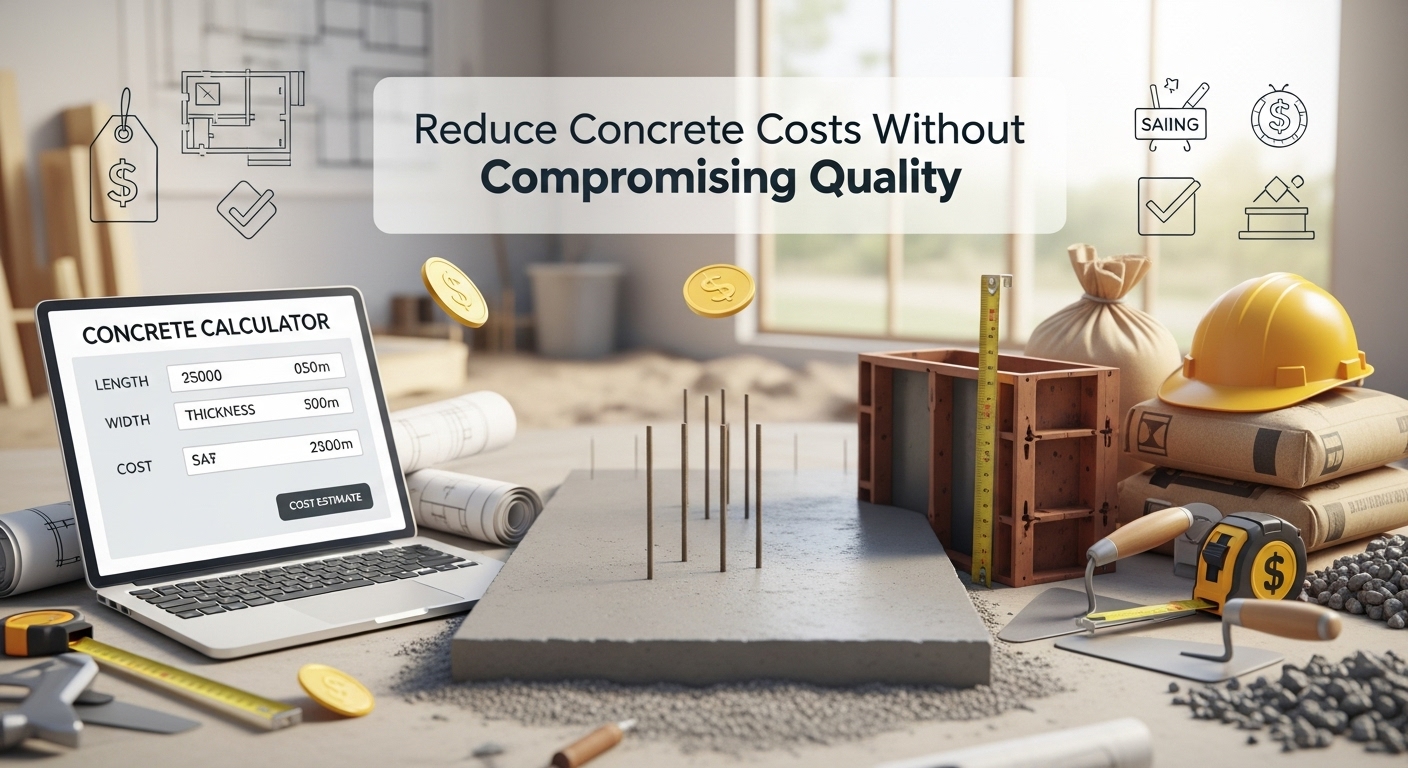
The good news is that reducing concrete costs doesn’t have to mean compromising on quality. With careful planning, smart material choices, and the right tools, you can save money while ensuring your concrete project remains strong, durable, and long-lasting. In this blog, we’ll share practical tips and strategies to lower concrete costs while maintaining top-notch quality.
Table of Contents
- Understand Concrete Cost Components
- Use a Concrete Calculator for Accurate Estimates
- Plan Your Project Dimensions Carefully
- Choose the Right Concrete Mix
- Avoid Over-Ordering: Include Only Necessary Waste
- Consider Local Suppliers and Delivery Options
- Use Reusable Forms and Molds
- DIY Where Possible Without Sacrificing Safety
- Regular Maintenance and Curing
- FAQs About Reducing Concrete Costs
- Conclusion
Understand Concrete Cost Components
Before diving into cost-saving tips, it’s essential to understand what makes up the cost of concrete. Concrete expenses are generally divided into the following components:
- Materials – Cement, sand, gravel, and water form the bulk of concrete costs. Specialty additives like fiber reinforcement, accelerators, or waterproofing agents can increase the price.
- Labor – Costs for mixing, pouring, leveling, and finishing concrete. Skilled labor ensures quality but can be a significant portion of the budget.
- Equipment and Tools – Wheelbarrows, mixers, trowels, and vibrators may be required depending on the scale of your project.
- Delivery Charges – If you’re ordering ready-mix concrete, transportation from the supplier adds to your total cost.
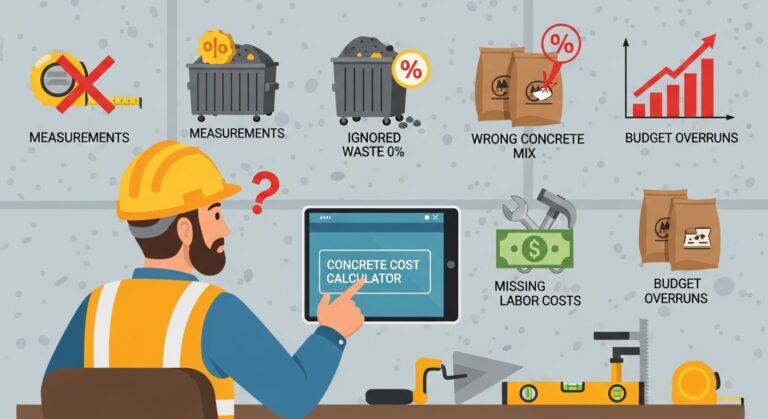
- Waste and Over-Ordering – Ordering too much concrete leads to unnecessary expense. Miscalculations in volume often contribute to waste.
Understanding these components helps you identify where to focus your cost-saving efforts without compromising the strength and durability of your concrete.
Use a Concrete Calculator for Accurate Estimates
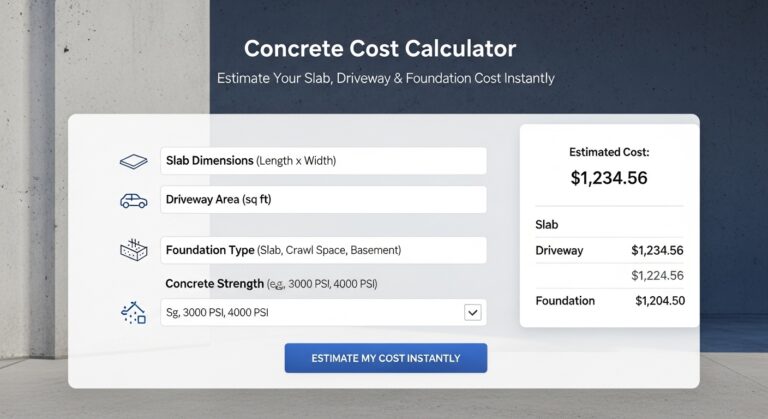
One of the most effective ways to avoid overspending on concrete is to use a reliable online concrete calculator. These tools allow you to:
- Input exact dimensions of your project (length, width, thickness)
- Calculate concrete volume in cubic meters, cubic feet, or cubic yards
- Automatically include a waste factor of 5-10%
- Estimate cost based on local concrete prices
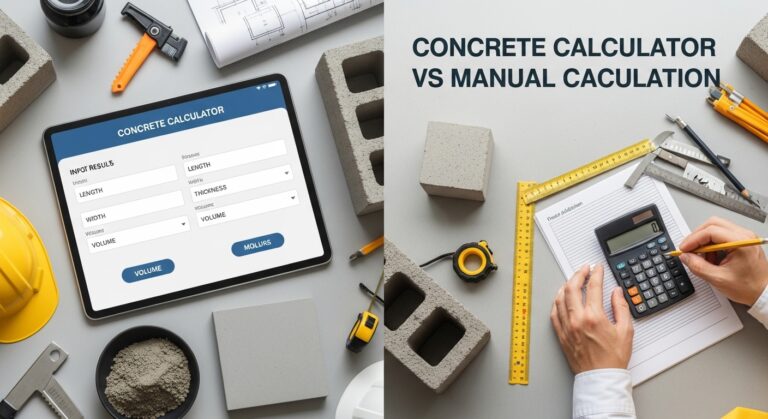
Benefits of Using a Concrete Calculator:
| Benefit | Explanation |
|---|---|
| Accuracy | Eliminates human error in manual calculations |
| Time-Saving | Get instant results without complex formulas |
| Cost Transparency | Helps compare prices before ordering |
| Waste Reduction | Only order what you need, minimizing excess |
For example, if you are planning a 6m × 5m × 0.15m slab, a calculator can instantly tell you the exact volume needed, including a small allowance for waste. This prevents over-ordering and reduces unnecessary expenses.
Plan Your Project Dimensions Carefully
Accurate planning is key to reducing concrete costs. Small adjustments in dimensions can make a significant difference in the required volume and cost.
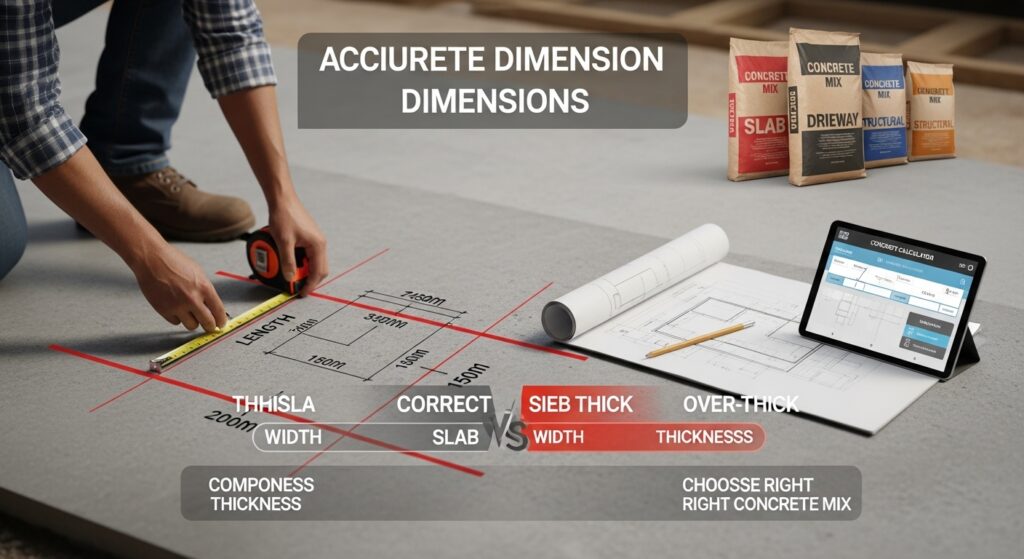
- Slab Thickness: Only increase thickness where structural requirements demand it. Extra thickness means more concrete and higher cost.
- Length and Width: Measure your project area precisely. Avoid overestimating by rounding up too much.
- Shape Optimization: For decorative projects, consider shapes that minimize corners or curves, which require more concrete and labor.
Tip: Break complex structures into smaller sections and calculate each separately using a calculator to ensure precision.
Choose the Right Concrete Mix
Different projects require different concrete mixes. Using a mix that’s stronger than necessary increases cost without added benefit.
- Residential Slabs and Patios: Standard mix (20–25 MPa) is usually sufficient.
- Driveways or Garage Floors: Medium-strength mix (25–30 MPa) provides durability.
- Structural Foundations or Columns: High-strength mix (30–40 MPa) is needed.
Tips to Save on Mix:
- Avoid specialty additives unless necessary.
- Consider local materials to reduce delivery charges.
- Buy ready-mix concrete in bulk for discounts if ordering large quantities.
Avoid Over-Ordering: Include Only Necessary Waste
While it’s important to include a waste factor (typically 5–10%), over-ordering can unnecessarily increase costs.
How to Avoid Over-Ordering:
- Use a concrete calculator for exact volume estimates.
- Measure multiple times before finalizing dimensions.
- Only add the recommended percentage for spillage or uneven surfaces.
Observation: Many DIY projects overspend up to 15% on concrete simply due to miscalculations. Using tools and careful planning can prevent this.
Consider Local Suppliers and Delivery Options
Concrete prices can vary significantly depending on supplier location, delivery distance, and order size.
Tips to Reduce Costs:
- Compare multiple local suppliers before ordering.
- Choose suppliers who offer free or low-cost delivery for bulk orders.
- Check if buying materials separately (cement, sand, gravel) is cheaper than ready-mix concrete.
Use Reusable Forms and Molds
Formwork can add to concrete project costs, especially for decorative or stair projects.
Ways to Save:
- Use reusable forms instead of disposable wood forms.
- Invest in durable molds for repeated projects.
- For DIY patios or steps, consider modular form kits that reduce labor and material waste.
DIY Where Possible Without Sacrificing Safety
Labor is a significant portion of concrete costs. While skilled labor ensures quality, some tasks can be safely done by homeowners or DIY enthusiasts:
- Measuring and marking project areas
- Mixing small batches of concrete (for minor projects)
- Pouring and leveling simple slabs under supervision
Caution: For large structural projects, always hire professionals to avoid safety hazards or structural failure.
Regular Maintenance and Proper Curing
Maintaining concrete after pouring ensures durability and reduces the likelihood of early repairs, which can be costly:
- Curing: Keep concrete moist for 7–14 days to prevent cracks.
- Sealing: Apply sealant to protect from water damage or stains.
- Cleaning: Avoid harsh chemicals that may degrade concrete surfaces.
Observation: Proper curing and maintenance increase the lifespan of your concrete, reducing long-term repair and replacement costs.
FAQs About Reducing Concrete Costs
Q1: How can I reduce concrete costs without affecting quality?
Ans: Plan dimensions accurately, use the right mix, avoid over-ordering, and consider DIY for non-structural tasks.
Q2: Can an online concrete calculator help save money?
Ans: Yes, calculators prevent over-ordering, minimize waste, and provide precise volume and cost estimates.
Q3: Is it cheaper to use ready-mix concrete or mix manually?
Ans: Small projects may benefit from manual mixing, but for large projects, ready-mix reduces labor and ensures consistent quality.
Q4: How much concrete waste should I include?
Ans: Typically 5–10% extra to account for spillage or uneven surfaces.
Q5: Are reusable forms cost-effective?
Ans: Absolutely. Reusable forms reduce material costs for multiple projects and save labor time.
Conclusion
Reducing concrete costs without compromising quality is entirely possible with smart planning, careful measurement, and the use of modern tools.
- Use online concrete calculators for accurate volume and cost estimates.
- Plan project dimensions carefully and avoid unnecessary thickness.
- Choose the right concrete mix for your specific project.
- Include only necessary waste and avoid over-ordering.
- Consider local suppliers, reusable forms, and DIY labor where safe.
- Maintain and cure concrete properly to prevent long-term repair costs.
By combining these strategies, you can complete your concrete project efficiently, affordably, and with long-lasting quality. Whether you’re a homeowner, contractor, or DIY enthusiast, these tips will help you maximize your budget and minimize waste.