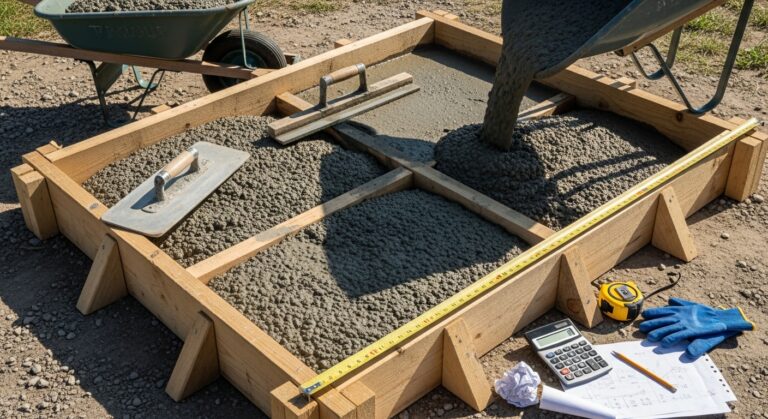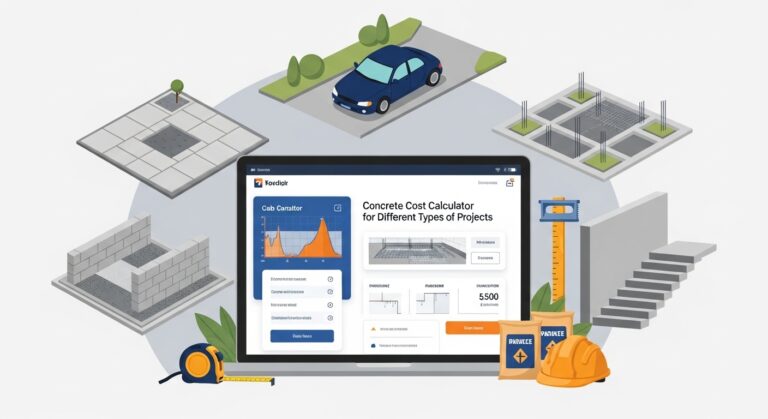
When it comes to planning a concrete project, one of the most important steps is calculating the amount of concrete you’ll need. Whether you’re pouring a driveway, building a patio, or constructing a foundation, the accuracy of your calculation can save you money, reduce waste, and prevent project delays.
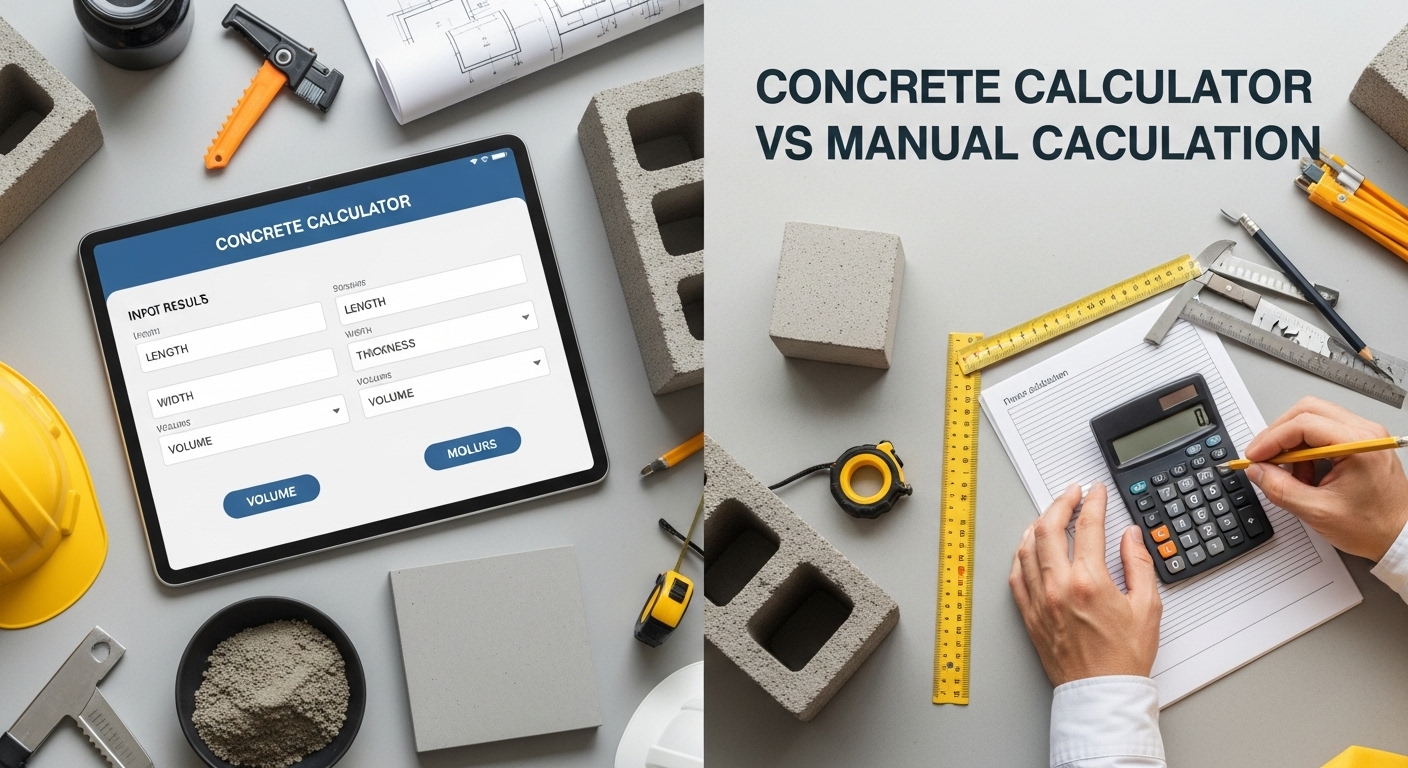
Traditionally, concrete calculations were done manually using formulas and measurements. However, with the rise of digital tools, online concrete calculators have become popular. But the question remains: which method is more accurate a concrete calculator or manual calculation? In this blog, we’ll explore both approaches, their advantages and disadvantages, and guide you on how to achieve the most precise results.
What Is a Concrete Calculator?
A concrete calculator is an online or software tool that estimates the amount of concrete required for a project. These calculators allow users to enter dimensions like length, width, and thickness and then automatically compute the volume of concrete in cubic feet, cubic meters, or cubic yards.
Advantages of Using a Concrete Calculator:
- Instant calculations without manual formulas
- Accurate volume estimations for irregular shapes
- Time-saving and user-friendly
- Provides cost estimation based on local concrete prices
- Reduces material wastage
How Manual Concrete Calculation Works
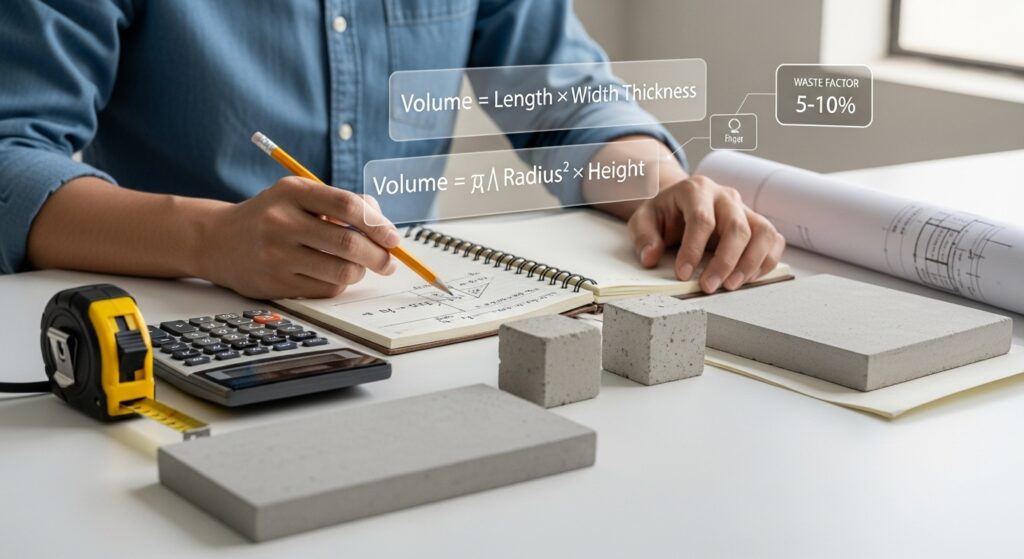
Manual calculation is the traditional way of determining concrete volume using mathematical formulas. The process depends on the shape of the project. Here’s a quick guide:
- Measure Dimensions: Take accurate measurements of length, width, and thickness.
- Calculate Volume: Use geometric formulas:
- Rectangular Slab:
Volume = Length × Width × Thickness - Cylinder (columns/pillars):
Volume = π × Radius² × Height - Steps: Break down into rectangular prisms and sum volumes
- Rectangular Slab:
- Convert Units: Convert cubic feet to cubic yards or cubic meters if required.
- Add Waste Factor: Typically 5-10% extra concrete to account for spillage, uneven surfaces, and errors.
Manual Calculation Example:
| Project Type | Dimensions | Volume Calculation | Volume (cubic meters) |
|---|---|---|---|
| Concrete Slab | 5m × 4m × 0.1m | 5 × 4 × 0.1 | 2 |
| Column | Radius 0.3m, Height 3m | 3.1416 × 0.3² × 3 | 0.848 |
| Stairs | 2m × 1m × 0.2m × 5 steps | 2 × 1 × 0.2 × 5 | 2 |
While manual calculation is straightforward for simple shapes, it becomes challenging and prone to error for irregular structures or complex projects.
Factors Affecting Concrete Accuracy
Whether you use a calculator or manual calculation, several factors influence the accuracy of your concrete estimates:
- Incorrect Measurements: Even a small miscalculation in thickness or dimensions can drastically affect volume.
- Complex Shapes: Irregular shapes like curved patios, steps, or stamped concrete require careful measurement.
- Waste Factor: Material spillage, over-excavation, and uneven surfaces require extra concrete.
- Concrete Type: Different PSI ratings and mixes affect the volume needed for structural integrity.
- Temperature & Weather: Cold or hot weather can influence concrete setting and shrinkage.
These factors highlight the importance of using precise tools and methods for estimating concrete requirements.
Concrete Calculator vs. Manual Calculation: Pros and Cons
Let’s compare both methods to understand which is more accurate and efficient.
| Feature | Concrete Calculator | Manual Calculation |
|---|---|---|
| Accuracy | High, reduces human error | Medium, prone to measurement errors |
| Ease of Use | Very easy, user-friendly | Requires understanding of formulas |
| Time Required | Seconds | Minutes to hours depending on project |
| Handling Complex Shapes | Excellent | Difficult, requires breaking into shapes |
| Cost Estimation | Usually included | Requires separate calculation |
| Waste Factor Inclusion | Often built-in | Must be manually added |
Key Insight: For simple, small projects, manual calculation can work well. For large or complex projects, online concrete calculators are more accurate and save time.
Step-by-Step Examples
Example 1: Concrete Slab
Project Dimensions: 6m × 5m × 0.15m
Manual Calculation:
Volume = 6 × 5 × 0.15 = 4.5 cubic meters
Concrete Calculator Result:
Volume = 4.5 cubic meters + 5% waste = 4.725 cubic meters
Observation: The calculator automatically accounts for waste and gives a more practical estimate.
Example 2: Curved Patio
Project Dimensions: Radius 3m, Thickness 0.1m
Manual Calculation:
Volume = π × 3² × 0.1 ≈ 2.827 cubic meters
Concrete Calculator Result:
Volume = 2.827 + waste factor ≈ 2.97 cubic meters
Observation: For curved shapes, calculators simplify the process and ensure no miscalculation.
Tips to Improve Accuracy in Concrete Estimation
- Always Measure Twice: Check your dimensions carefully.
- Use Online Calculators for Complex Projects: Irregular shapes are prone to manual errors.
- Include Waste Factor: Typically 5-10% extra concrete.
- Check Local Concrete Prices: Many calculators provide cost estimation.
- Choose Correct Concrete Mix: Structural projects require specific PSI ratings.
- Document Your Calculation: Helps avoid mistakes during ordering and pouring.
By following these tips, you can combine the accuracy of calculators with manual verification for optimal results.
FAQs about Concrete Calculator
Q1: Can I rely solely on a concrete calculator?
Ans: Yes, for most projects, calculators provide accurate results. For critical structural work, double-check with manual calculations or consult an engineer.
Q2: How much concrete should I add for waste?
Ans: Usually, 5-10% extra concrete is recommended for small to medium projects.
Q3: Are online concrete calculators free?
Ans: Most online calculators are free and easy to use, including ours at Concrete Cost Calculator.
Q4: Can a manual calculation handle complex structures?
Ans: It’s possible but prone to errors. Breaking the structure into simple geometric shapes is necessary.
Q5: Do calculators also provide cost estimates?
Ans: Yes, many concrete calculators include cost estimation based on local concrete prices.
Conclusion
When it comes to accuracy, efficiency, and convenience, online concrete calculators out perform manual calculations, especially for complex or large projects. Manual calculations are still useful for simple projects or as a double-check, but the modern approach is to use calculators that include waste factors, cost estimation, and volume conversions.
By combining careful measurement, the right concrete mix, and the power of online concrete calculators, you can ensure your project is cost-effective, precise, and hassle-free.