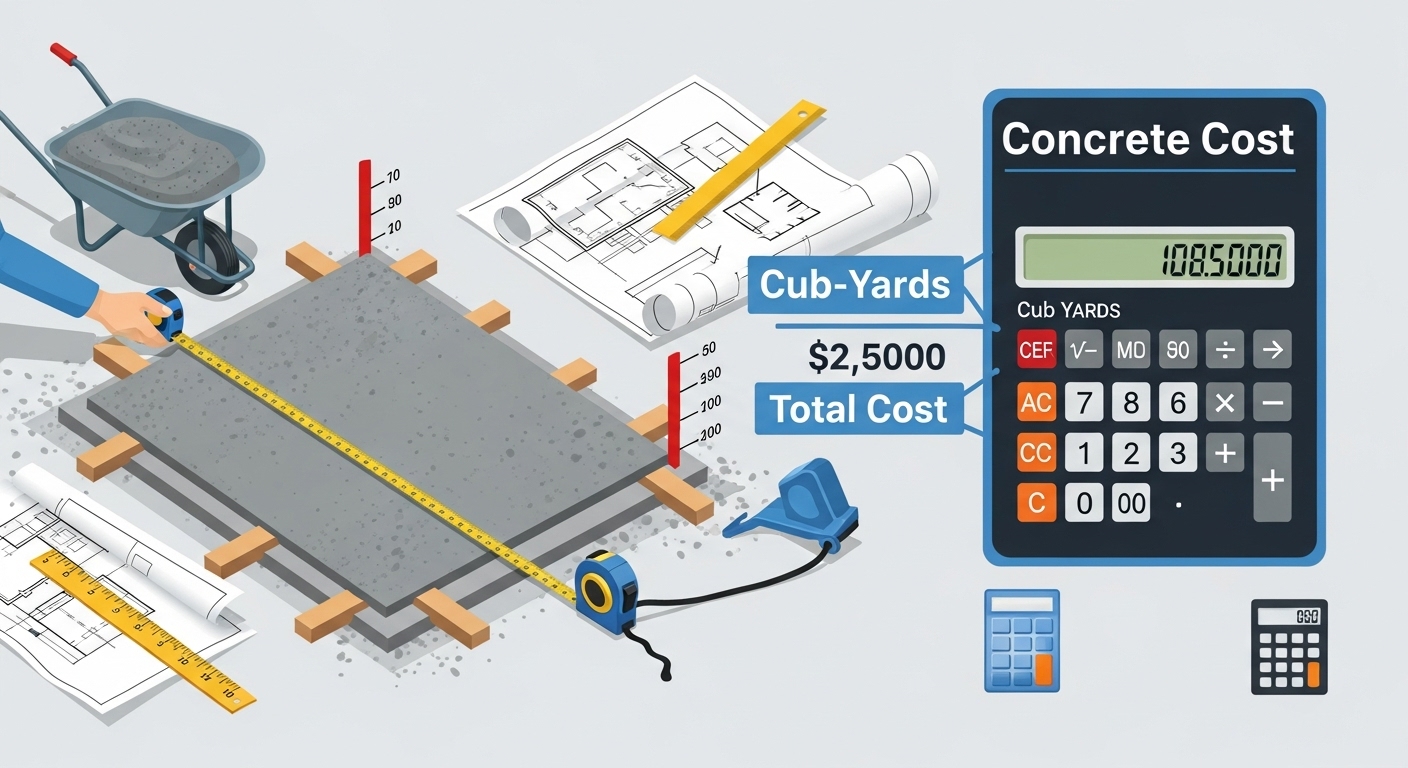
When planning any concrete project whether it’s a slab, driveway, patio, foundation, wall, or stairs one of the first questions people ask is:
How much concrete do I need, and how much will it cost?
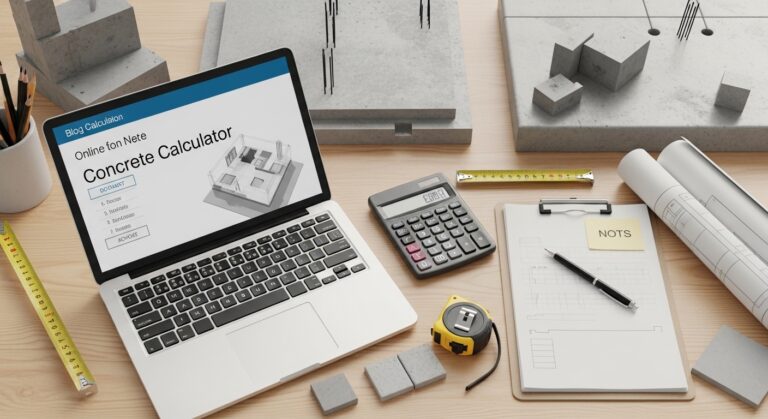
This is where a concrete cost calculator becomes extremely useful. However, many users don’t fully understand how concrete volume turns into concrete cost, or how calculators actually work behind the scenes.
In this detailed guide, we’ll clearly explain the relationship between concrete volume and cost, how calculators estimate pricing, and how you can get the most accurate results for your project.
Why Concrete Volume and Cost Matter
Concrete projects often fail at the budgeting stage because people misunderstand one simple thing:
Concrete cost is driven by concrete volume.
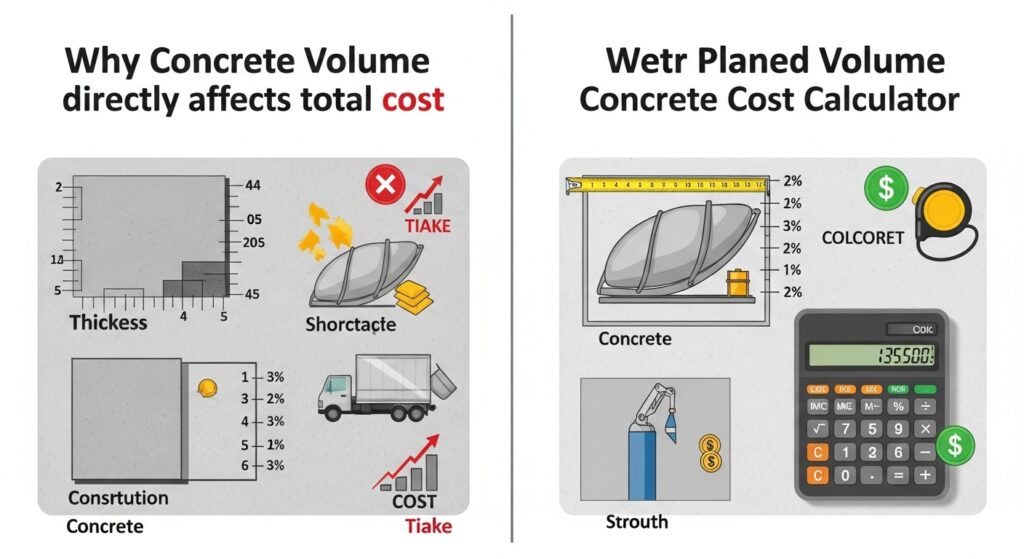
Even small miscalculations in thickness or dimensions can result in:
- Under-ordering concrete
- Wasted money
- Project delays
- Extra delivery charges
A concrete calculator removes guesswork and provides reliable cost estimates based on real construction logic.
What Is Concrete Volume?
Concrete volume refers to the total amount of concrete needed to fill a space. It is typically measured in:
- Cubic feet
- Cubic yards (most common in the U.S.)
- Cubic meters (international projects)
Simple Explanation
Concrete volume answers this question:
How much space will the concrete occupy once poured?
The larger or thicker the structure, the higher the concrete volume and the higher the cost.
How Concrete Volume Is Calculated
Concrete volume is calculated using geometry, based on the project’s shape.
Basic Formula
Volume = Length × Width × Thickness
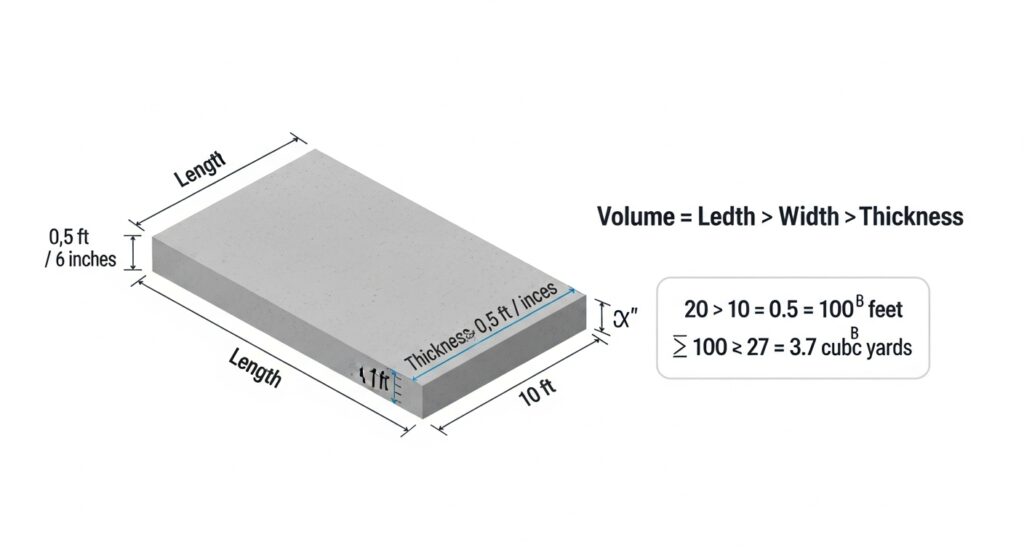
Example:
- Length: 20 ft
- Width: 10 ft
- Thickness: 0.5 ft (6 inches)
Volume = 20 × 10 × 0.5 = 100 cubic feet
Since concrete is sold in cubic yards:
100 ÷ 27 = 3.7 cubic yards
This conversion is automatically handled by a concrete calculator.
What Does Concrete Cost Include?
Concrete cost is more than just material pricing. It often includes:
- Cost per cubic yard
- Labor costs
- Delivery charges
- Reinforcement materials
- Finishing work
- Waste allowance
That’s why calculators provide better estimates than simple manual math.
Concrete Volume vs. Cost: Understanding the Relationship
Concrete volume and cost are directly linked:
- More volume = higher cost
- Less volume = lower cost
However, cost does not increase in a perfectly straight line.
Why?
Because cost is also influenced by:
- Concrete mix type
- Project complexity
- Labor requirements
- Site accessibility
- Local pricing
Two projects with the same volume can still have very different total costs.
How a Concrete Cost Calculator Works
A professional concrete calculator follows a structured process.
Step 1: Enter Project Dimensions
Users input:
- Length
- Width
- Thickness
- Shape (slab, footing, wall, stairs)
Step 2: Volume Calculation
The calculator:
- Applies correct formulas
- Converts measurements
- Outputs total cubic yards
Step 3: Waste and Overpour Allowance
Most calculators add 5–10% extra to account for:
- Spillage
- Uneven surfaces
- Formwork gaps
Step 4: Cost per Cubic Yard
The calculator multiplies volume by:
- Local average concrete prices
Step 5: Additional Costs
Some calculators also include:
- Labor
- Reinforcement
- Finishing
- Delivery fees
This results in a realistic estimate instead of a guess.
Why Concrete Thickness Has the Biggest Impact on Cost
Thickness is the most underestimated factor in concrete projects.
| Thickness | Volume (10×10 slab) | Cost Impact |
|---|---|---|
| 4 inches | Low | Cheapest |
| 6 inches | Medium | +30% |
| 8 inches | High | +50% or more |
Even a small thickness increase significantly raises volume and cost.
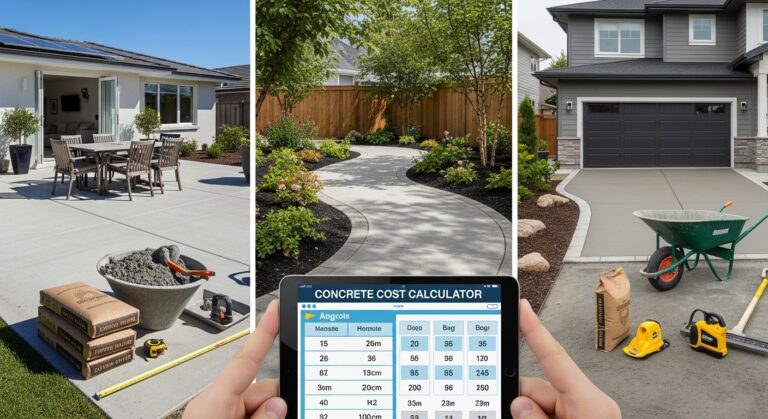
Concrete Volume and Cost by Project Type
Concrete Slabs
- Simple calculations
- Lower labor cost
- Predictable pricing
Driveways
- Thicker edges
- Reinforcement required
- Higher finishing cost
Foundations
- Structural concrete
- Deeper pours
- Higher PSI mix
Footings and Walls
- Vertical formwork
- More labor
- Precision required
Concrete Stairs
- Complex geometry
- High labor and waste
- Expensive finishing
Each project type uses different calculation logic.
Concrete Mix Types and Their Effect on Cost
Not all concrete costs the same.
Standard Concrete
- Most affordable
- Used for patios and sidewalks
High-Strength Concrete
- Higher PSI
- Used for driveways and foundations
- Costs more
Fiber-Reinforced Concrete
- Added durability
- Reduced cracking
- Higher material cost
Decorative or Stamped Concrete
- Same volume
- Much higher labor and finishing cost
How Location and Regional Pricing Affect Concrete Cost
Concrete prices vary by region due to:
- Material availability
- Fuel and transport costs
- Labor rates
- Local demand
That’s why online calculators rely on regional averages, not fixed prices.
Common Mistakes When Estimating Concrete Volume and Cost
- Guessing thickness
- Ignoring waste allowance
- Using wrong units
- Forgetting labor costs
- Underestimating delivery fees
A concrete calculator eliminates these mistakes.
How to Get the Most Accurate Results from a Concrete Calculator
Follow these tips:
- Measure carefully
- Use exact thickness
- Select the correct shape
- Include waste allowance
- Use realistic price ranges
Better inputs = better estimates.
Benefits of Using an Online Concrete Cost Calculator
- Instant volume calculation
- Accurate cost estimates
- Saves time and money
- Beginner-friendly
- No manual formulas
- Ideal for budgeting
This makes online calculators essential tools for both homeowners and contractors.
Concrete Volume vs. Cost: Key Takeaways
- Concrete volume determines material quantity
- Cost depends on volume plus labor and materials
- Thickness has the biggest impact
- Calculators simplify complex math
- Accurate inputs prevent budget surprises
FAQs about Concrete Volume
Q1: How much concrete do I need per square foot?
Ans: It depends on thickness. A 4-inch slab needs about 0.012 cubic yards per square foot.
Q2: Why is my concrete estimate higher than expected?
Ans: Thicker pours, reinforcement, labor, and delivery fees increase cost.
Q3: Is it better to order extra concrete?
Ans: Yes. Running short is more expensive than ordering slightly extra.
Q4: Do calculators include labor costs?
Ans: Some do, some don’t. Always check what’s included.
Q5: Can I use a calculator for any concrete shape?
Ans: Yes. Advanced calculators support slabs, footings, walls, and stairs.
Conclusion:
Understanding the relationship between concrete volume and cost helps you plan projects more efficiently and avoid unexpected expenses. A reliable concrete cost calculator combines geometry, pricing data, and real-world construction factors into one simple tool.
Whether you are working on a small DIY project or a large construction job, knowing how your calculator works gives you control, accuracy, and confidence.