Concrete is one of the most widely used construction materials in the world. From simple home patios to large foundations and structural walls, concrete plays a crucial role in both residential and commercial projects. However, estimating how much concrete you need and how much it will cost can be confusing without the right tools.
This is where a Concrete Cost Calculator becomes extremely valuable.
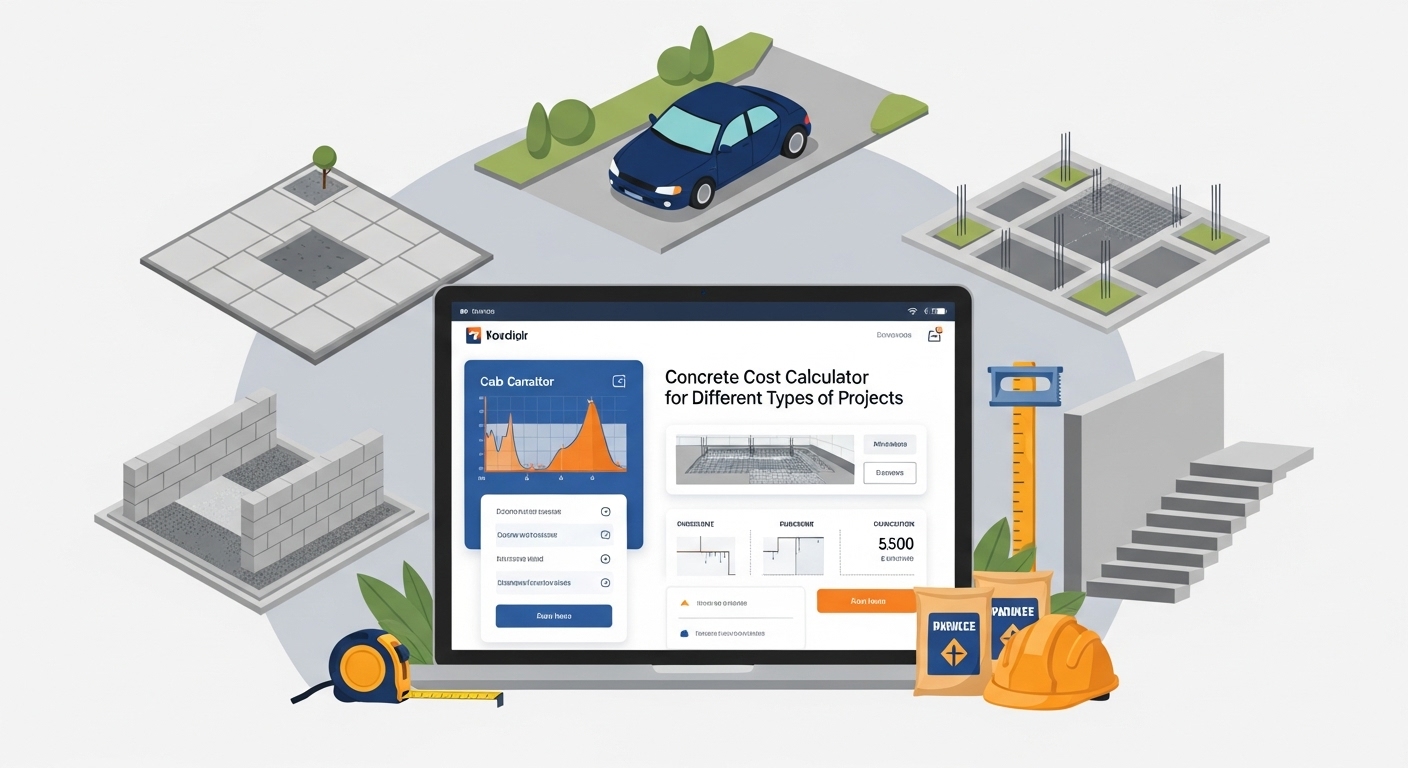
In this detailed guide, we will explain how to use a concrete cost calculator for different types of projects, including slabs, driveways, patios, foundations, walls, and stairs. We’ll also cover practical tips, cost factors, and common mistakes so you can plan your project with confidence and accuracy.
1. What Is a Concrete Cost Calculator?
A Concrete Cost Calculator is an online tool designed to help users calculate:
- The volume of concrete required
- The number of concrete bags needed (if using bagged concrete)
- The total estimated cost of concrete
By entering basic dimensions such as length, width, and depth, along with the price of concrete, the calculator instantly provides accurate results.
Modern concrete calculators support multiple project types and shapes, making them ideal for both DIY homeowners and professional contractors.
2. Why Different Projects Need Different Calculations
Not all concrete projects are the same. A driveway, for example, requires thicker concrete and reinforcement compared to a patio. A foundation must support heavy loads, while stairs involve complex shapes and steps.
Each project type differs in:
- Thickness requirements
- Structural load
- Shape and complexity
- Reinforcement needs
A good concrete cost calculator allows you to select the project type so calculations are tailored to your specific needs.
3. Concrete Cost Calculator for Slabs
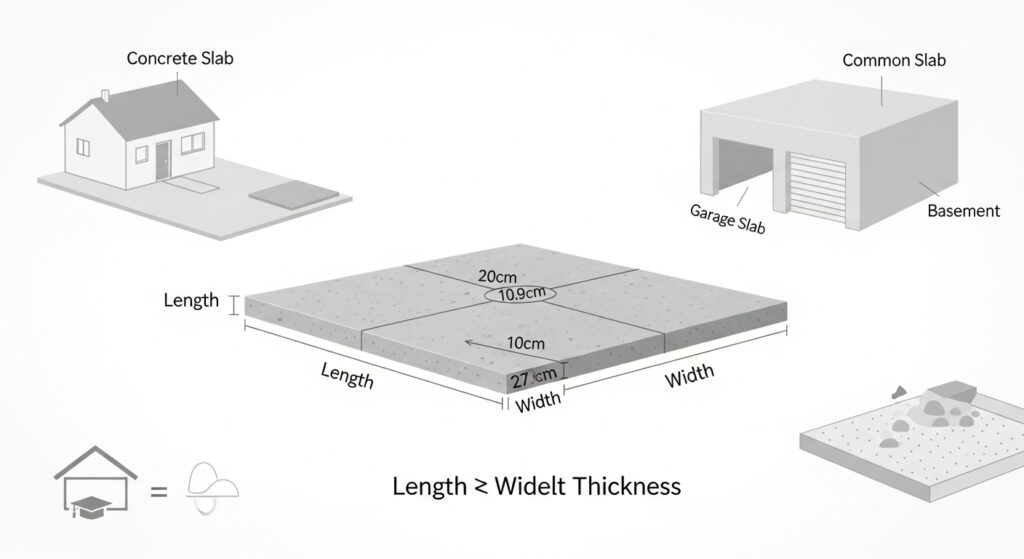
Concrete slabs are one of the most common concrete projects.
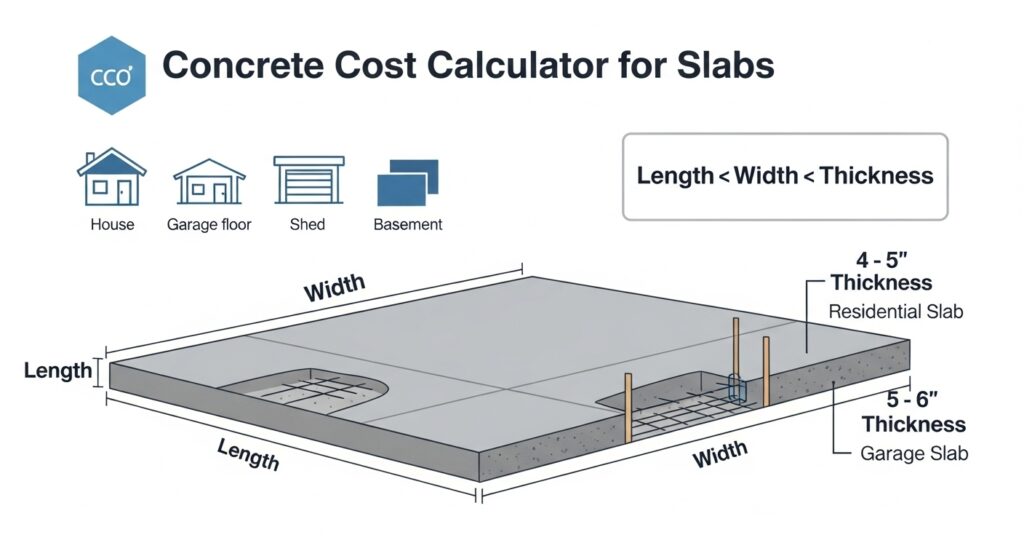
Common Uses of Concrete Slabs
- House floors
- Garage floors
- Sheds
- Basements
How the Calculator Works for Slabs
You typically enter:
- Length
- Width
- Thickness
Formula Used:
Length × Width × Thickness
Typical Slab Thickness
- Residential slab: 4–5 inches
- Garage slab: 5–6 inches
The calculator then converts the volume into cubic yards or cubic meters and estimates the cost.
Cost Tip
Adding reinforcement like rebar or wire mesh increases cost but improves durability.
4. Concrete Cost Calculator for Driveways
Driveways require stronger concrete due to vehicle load.
Key Driveway Considerations
- Thicker concrete (usually 5–6 inches)
- Reinforcement is highly recommended
- Larger surface area
Calculator Inputs
- Length of driveway
- Width
- Thickness
Because driveways use more concrete, calculators are especially useful to avoid overordering or underordering.
Cost Tip
Concrete driveways are usually more cost-effective than asphalt over the long term due to durability.
5. Concrete Cost Calculator for Patios
Concrete patios are popular for outdoor living spaces.
Why Patios Are Different
- Usually thinner than driveways
- Often decorative
- May include stamped or colored concrete
Calculator Inputs
- Patio length
- Patio width
- Thickness (usually 4 inches)
Decorative finishes increase cost but are not always included in basic calculators, so plan extra budget.
6. Concrete Cost Calculator for Foundations
Foundations are critical to building safety and stability.
Types of Concrete Foundations
- Slab-on-grade
- Strip footing foundation
- Full basement foundation
Calculator Requirements
Foundations often require multiple calculations:
- Footings
- Slabs
- Foundation walls
Advanced calculators allow you to calculate each component separately.
Cost Tip
Foundation projects often involve excavation and labor costs that calculators may not include.
7. Concrete Cost Calculator for Concrete Walls
Concrete walls are used for:
- Retaining walls
- Boundary walls
- Structural walls
Wall Calculator Inputs
- Wall length
- Wall height
- Wall thickness
Formula Used:
Length × Height × Thickness
Concrete wall projects usually require reinforcement, which increases the total cost beyond the calculator estimate.
8. Concrete Cost Calculator for Stairs
Concrete stairs are more complex than flat surfaces.
Why Stairs Cost More
- Multiple steps
- Complex shapes
- More formwork required
Calculator Approach
Some calculators:
- Estimate stairs as solid concrete blocks
- Use step-by-step volume calculations
Because stairs are detailed structures, always add extra allowance for waste and labor.
9. Ready-Mix vs Bagged Concrete for Different Projects
Ready-Mix Concrete
Best for:
- Driveways
- Foundations
- Large slabs
Pros:
- Faster installation
- Consistent quality
Cons:
- Delivery fees
- Minimum order limits
Bagged Concrete
Best for:
- Small patios
- Repair work
- Small slabs
Pros:
- Easy to transport
- No delivery fee
Cons:
- More labor
- Higher cost per unit
Concrete cost calculators help compare both options easily.
10. Factors That Affect Concrete Cost Across All Projects
Regardless of project type, several factors influence cost:
- Concrete price per unit
- Project size
- Thickness
- Reinforcement needs
- Waste percentage
- Delivery charges
- Labor cost
Understanding these factors helps you adjust your budget beyond calculator estimates.
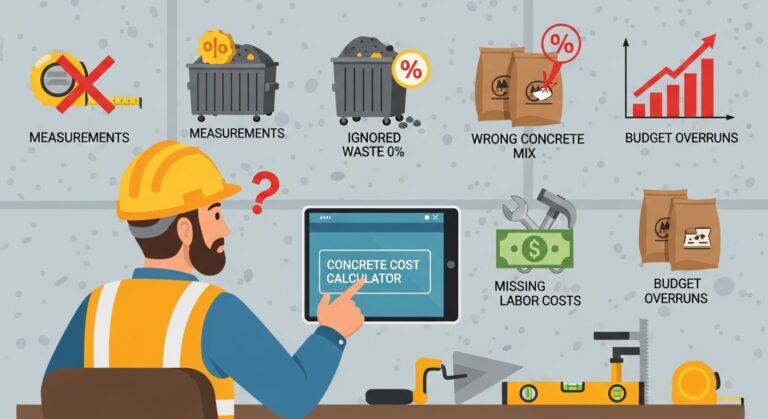
11. Common Estimation Mistakes to Avoid
Avoid these common mistakes when using a concrete cost calculator:
- Mixing metric and imperial units
- Forgetting waste allowance
- Using incorrect thickness
- Ignoring delivery fees
- Overlooking reinforcement cost
Double-checking inputs ensures accurate results.
12. Tips for Getting the Most Accurate Results
Follow these tips for best results:
- Measure twice before entering values
- Always add 5–10% extra concrete
- Use project-specific calculator options
- Confirm local concrete prices
- Add a contingency budget
These steps help prevent unexpected costs.
13. FAQs about Concrete Cost Calculator
Q.No:1 Can one calculator be used for all project types?
Ans: Yes, advanced concrete calculators support slabs, driveways, patios, foundations, walls, and stairs.
Q.No:2 How thick should concrete be for a driveway?
Ans: Typically 5–6 inches for residential driveways.
Q.No:3 Should I include waste in my calculation?
Ans: Yes, always add 5–10% extra concrete.
Q.No:4 Is a concrete cost calculator accurate?
Ans: It is accurate for material estimation, but labor and site costs should be added separately.
Q.No:5 Is ready-mix concrete cheaper than bagged concrete?
Ans: For large projects, ready-mix is usually more cost-effective.
Conclusion
Concrete Cost Calculator for Different Types of Projects is an essential tool for accurate planning and budgeting. Whether you are working on slabs, driveways, patios, foundations, walls, or stairs, using the right calculator helps you estimate material needs, control costs, and reduce waste.
While calculators provide an excellent starting point, always remember to consider real-world factors such as labor, site conditions, and delivery fees. By combining calculator results with proper planning, you can ensure your concrete project is successful, efficient, and cost-effective.