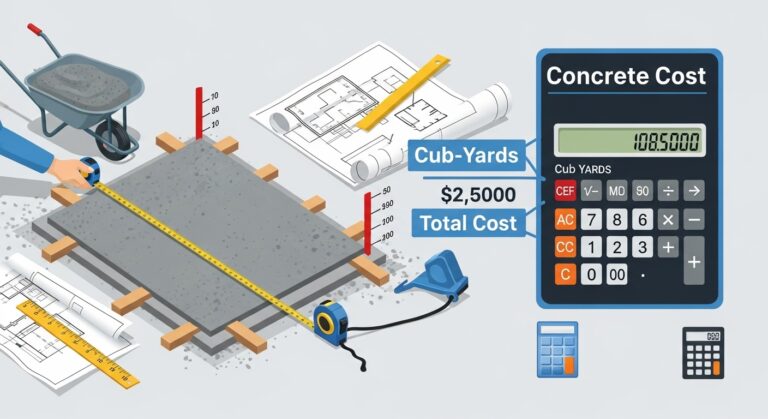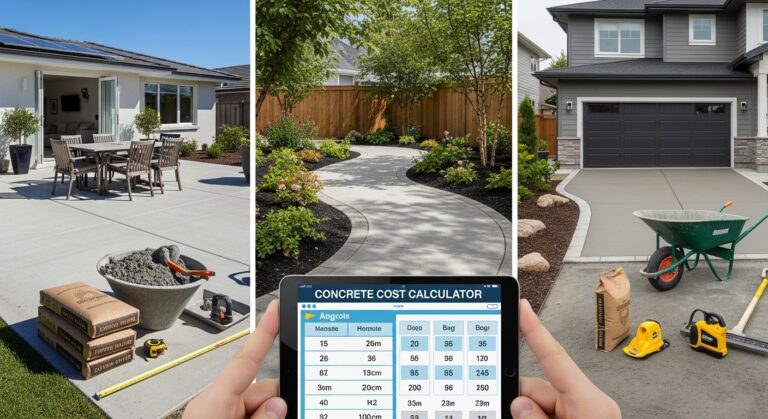
Concrete costs calculator is an excellent tool for estimating how much your concrete project might cost. It quickly tells you how much concrete you need, how many bags to buy, or how much ready-mix concrete to order. However, while calculators are very helpful, they do not always show the full picture.
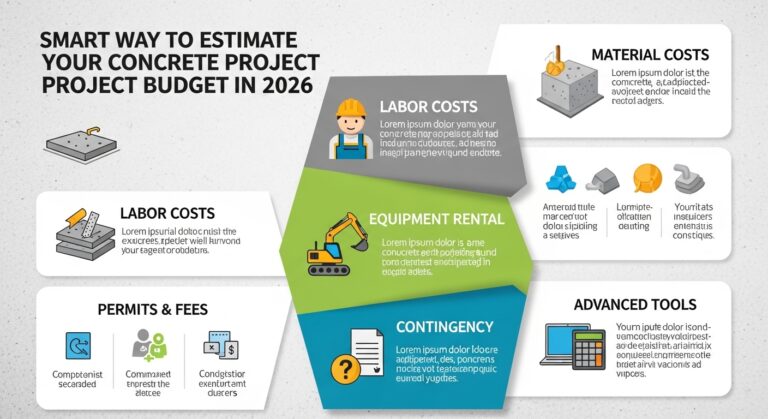
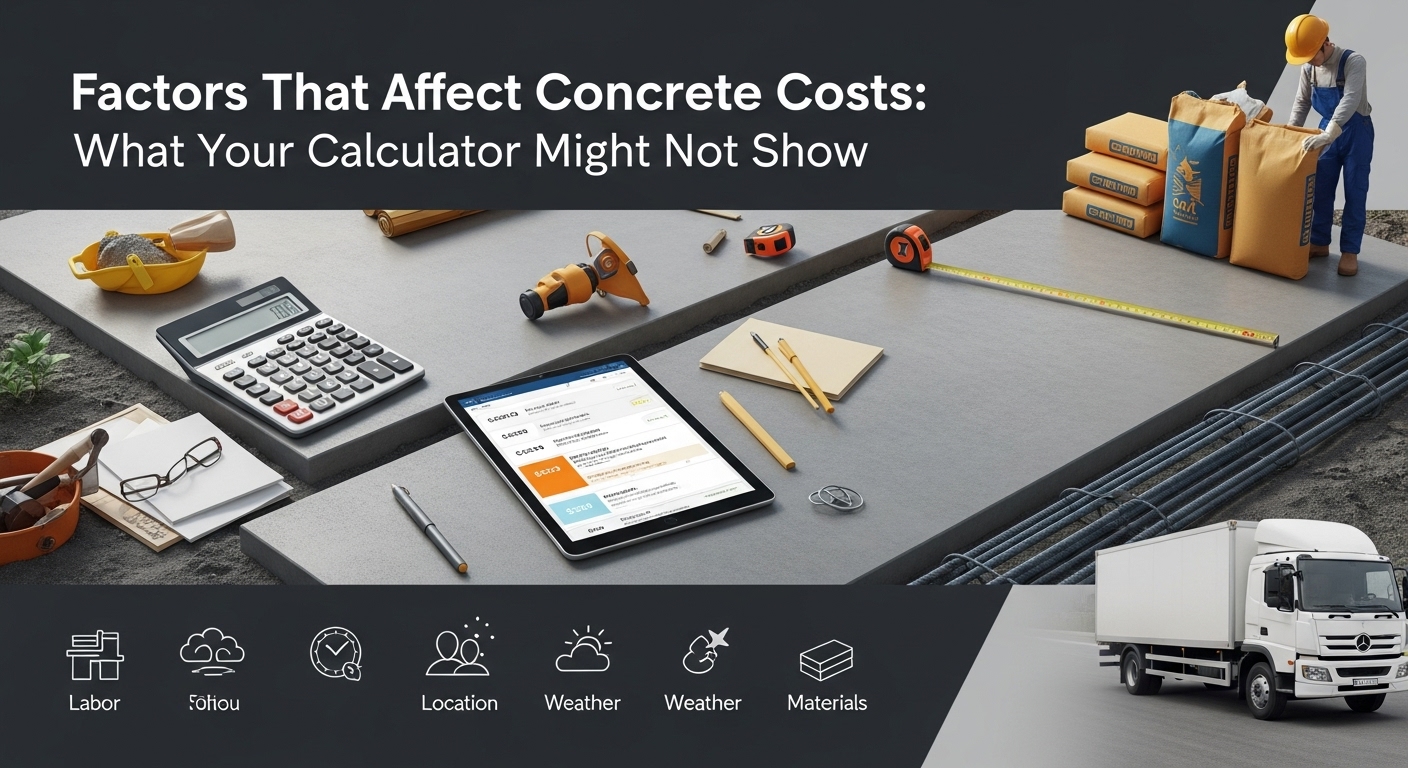
In real-world construction projects, concrete costs are influenced by many hidden and variable factors things that a basic calculator cannot always predict. These include material quality, labor rates, location, site conditions, waste, delivery charges, weather, and more.
In this detailed guide, we will explain all the major factors that affect concrete costs, including what your calculator might not show, so you can budget smarter and avoid costly surprises
1. Why Concrete Cost Calculators Are Helpful
Concrete cost calculators are designed to give quick and reliable estimates based on measurements like length, width, depth, and price per unit. They are great for:
- Estimating concrete volume
- Calculating material cost
- Comparing bagged vs ready-mix concrete
However, calculators usually assume ideal conditions. They often do not account for real-world challenges such as difficult terrain, labor shortages, price fluctuations, or unexpected delays.
That’s why understanding the hidden factors is essential.
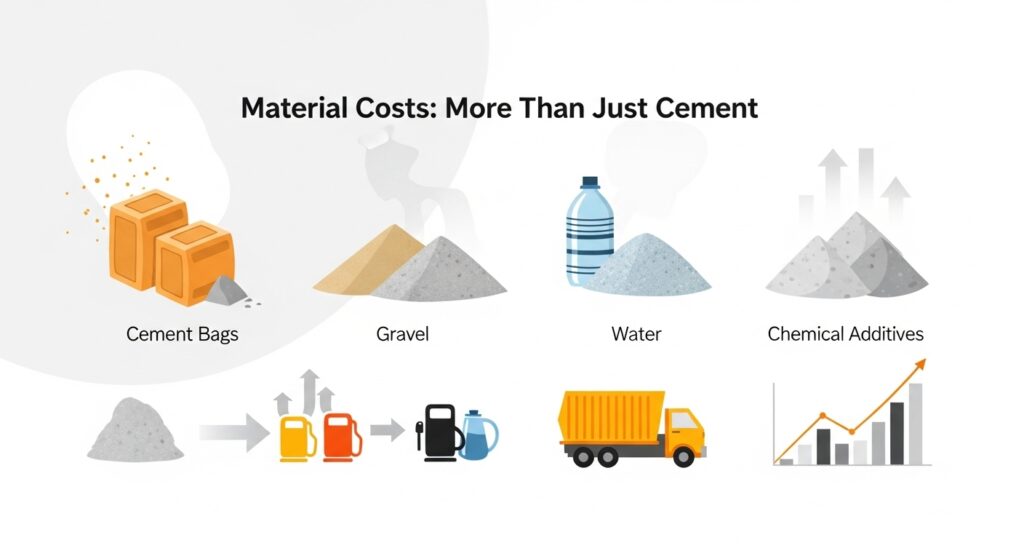
2. Material Costs: More Than Just Cement
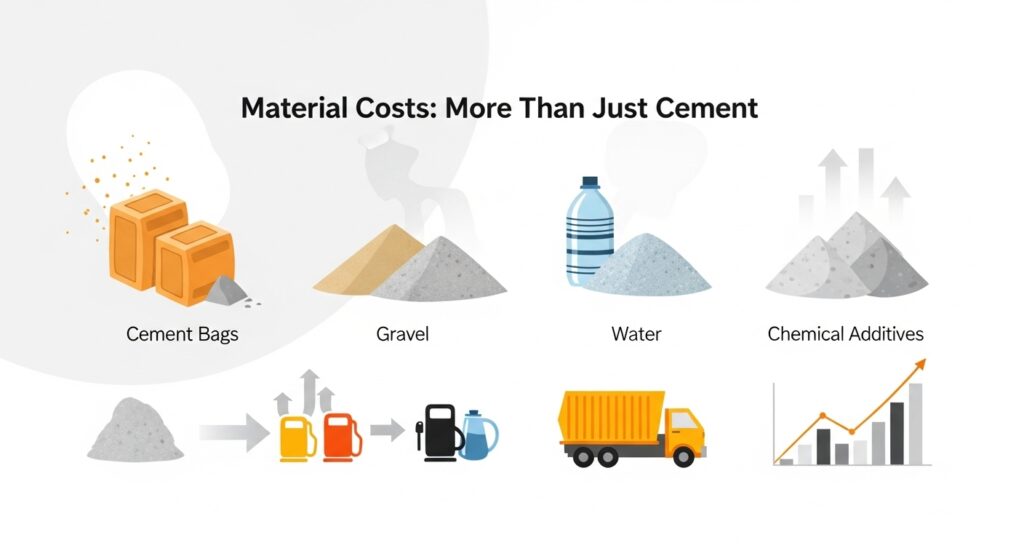
Many people think concrete cost is only about cement but concrete is a mixture of multiple materials.
Key Materials That Affect Cost
- Cement
- Sand
- Gravel or aggregate
- Water
- Chemical additives
Higher-quality materials or special blends (such as high-strength or fast-setting concrete) cost more than standard mixes.
Price Fluctuations
Material prices change due to:
- Fuel costs
- Supply chain issues
- Local demand
Your calculator may use average prices, but real market prices can vary significantly.
3. Labor Costs and Installation Charges
Most concrete calculators focus only on material costs and exclude labor.
Labor Costs Depend On:
- Local wage rates
- Project complexity
- Experience level of workers
- Duration of the project
For example:
- A simple slab costs less to install
- Decorative or reinforced concrete requires skilled labor
Labor can sometimes cost as much as the concrete itself, especially for detailed work.
4. Location and Regional Price Differences
Concrete costs vary widely depending on where you live.
Location Affects:
- Material availability
- Transportation distance
- Labor rates
- Local regulations
Urban areas often have higher labor and delivery concrete costs, while rural areas may have higher transportation charges.
A calculator cannot always adjust for local market conditions unless it is region-specific.
5. Concrete Type and Mix Design
Not all concrete is the same.
Common Concrete Types:
- Standard concrete
- High-strength concrete
- Fiber-reinforced concrete
- Decorative concrete
- Lightweight concrete
Special mixes require additional materials and processing, increasing the total cost.
Most calculators assume standard concrete, which may not match your actual project needs.
6. Project Size and Complexity
Bigger projects usually have a lower cost per unit, but higher total cost.
Complexity Increases Cost
- Irregular shapes
- Sloped surfaces
- Multi-level structures
- Tight spaces
Complex projects take longer to pour, finish, and cure raising labor and equipment costs.
7. Site Preparation and Ground Conditions
Site preparation is often overlooked but can significantly impact cost.
Common Site Preparation Tasks:
- Clearing debris
- Excavation
- Leveling the ground
- Soil compaction
Poor soil conditions may require extra work, such as gravel base or reinforcement, which calculators usually do not include.
8. Waste, Overordering, and Spillage
Concrete waste is unavoidable.
Why Waste Happens:
- Uneven surfaces
- Spillage during pouring
- Measurement errors
- Overordering to avoid shortages
Most professionals recommend adding 5% to 10% extra concrete.
While some calculators include waste percentage, many users forget to adjust it properly.
9. Delivery Fees and Minimum Load Charges
Ready-mix concrete often comes with hidden costs.
Common Delivery Charges:
- Truck delivery fee
- Short-load fee (small orders)
- Waiting time charges
If your project needs less concrete than a truck’s minimum load, you may still pay extra.
These costs are rarely included in basic calculators.
10. Weather and Seasonal Impact on Concrete Costs
Weather plays a big role in concrete projects.
Weather Can Increase Costs By:
- Slowing down work
- Requiring additives for cold or hot weather
- Causing delays and rework
Concrete poured in extreme temperatures needs special care, which adds to labor and material costs.
11. Formwork, Reinforcement, and Add-ons
Concrete alone is often not enough.
Additional Materials Include:
- Wooden or metal formwork
- Steel reinforcement bars (rebar)
- Wire mesh
- Expansion joints
These add-ons improve strength and durability but increase the total project cost usually not shown in calculators.
12. Permits, Inspections, and Local Regulations
Some projects require permits and inspections.
Possible Additional Costs:
- Building permits
- Engineering approvals
- Inspection fees
These costs vary by location and are not included in material calculators.
13. Equipment and Tool Rental Costs
Concrete projects often require equipment.
Common Rentals:
- Concrete mixers
- Vibrators
- Power trowels
- Cutting tools
Tool rental can add a noticeable amount to your budget, especially for DIY projects.
14. How to Adjust Your Budget Beyond the Calculator
To avoid surprises, follow these tips:
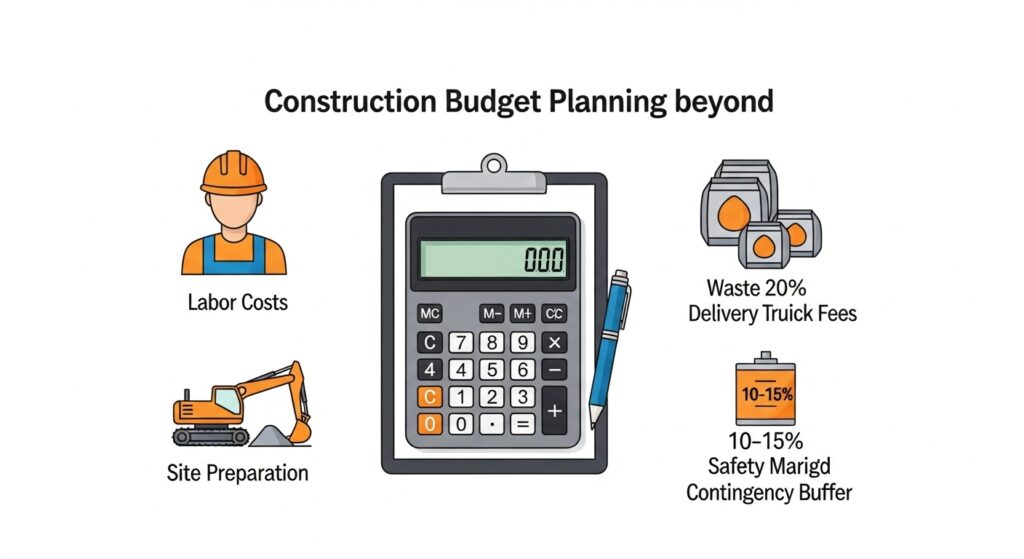
- Use the calculator as a starting point, not the final budget
- Add labor costs manually
- Include waste percentage
- Ask suppliers about delivery fees
- Consider site preparation expenses
- Add a contingency buffer of 10–15%
This approach ensures a more realistic estimate.
15. FAQs about Concrete Cost
Q.No:1 Why does my final concrete cost exceed the calculator estimate?
Because calculators usually exclude labor, delivery fees, site preparation, and other hidden costs.
Q.No:2 How much extra concrete should I order?
Ans: A waste allowance of 5%–10% is recommended.
Q.No:3 Are ready-mix concrete prices fixed?
Ans: No. Prices change based on fuel, demand, and location.
Q.No:4 Can weather really affect concrete costs?
Ans: Yes. Extreme temperatures require additives and extra labor.
Q.No:5 Should I rely only on a calculator?
Ans: No. Use it as a guide, then adjust for real-world factors.
16. Conclusion
Concrete cost calculator is an essential tool for planning your project, but it cannot capture every factor that affects the final cost. Materials, labor, location, site conditions, waste, delivery charges, weather, and regulations all play a major role in determining how much you will actually spend.
By understanding what your calculator might not show, you can create a more accurate budget, avoid unexpected expenses, and ensure your project runs smoothly from start to finish.
The smartest approach is to combine calculator estimates with real-world planning this way, you stay prepared, informed, and in control of your concrete project costs.